 EN
EN

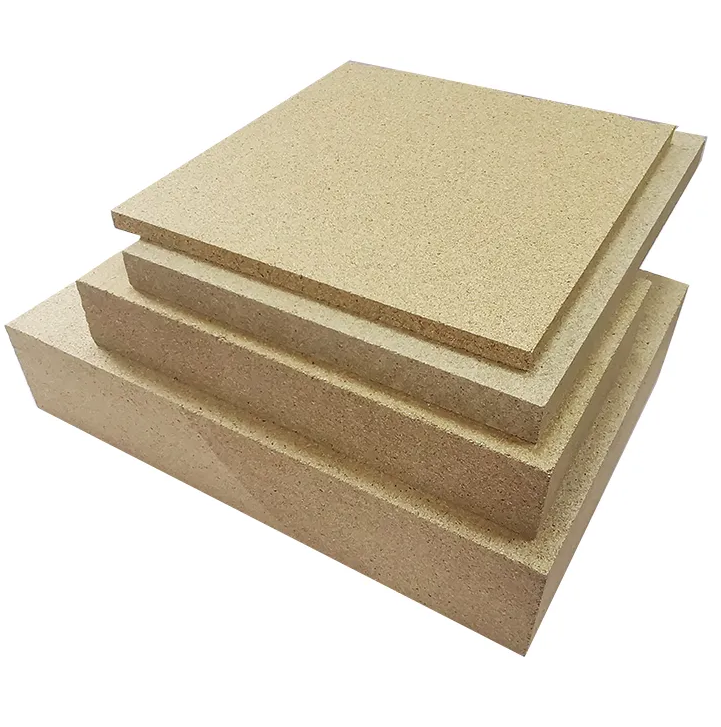
High Quality Raw Material Base Reduces Long Term Performance Degradation
The core foundation to prolong the service cycle of fire protection vermiculite boards lies in stable high purity raw material composition, as inferior mixed fillers trigger early pulverization and heat resistance decline under long term alternating high and low temperature environments. Premium fire boards adopt non asbestos silver expanded vermiculite matched with neutral inorganic binders, avoiding organic additives that decompose after years of thermal cycling. A real five year tracking case from an Indonesian industrial steel structure park fully verifies raw material quality impact. The park divided fire wall construction into two batches: low grade mixed filler vermiculite boards showed surface peeling within two years, while high purity silver vermiculite panels maintained complete structure and stable fire insulation performance to date. GB/T40417 national standard clearly regulates vermiculite expansion rate and inorganic binder proportion requirements for long life fire boards. Third party accelerated aging labs carry out 10 cycle humidity heat composite tests, proving boards with standardized mineral formulas retain eighty five percent original bending strength after long term use, far exceeding mixed filler alternatives that lose half mechanical performance within three years.
Standardized Seam Sealing Prevents Moisture Intrusion Damage
Unsealed gaps between spliced vermiculite boards become the main channel for water vapor penetration, which causes internal layered separation and permanent loss of fire resistance after repeated seasonal humidity changes. Moisture seeps into board pores and expands under high temperature working conditions, generating micro cracks that spread across the whole panel structure. Long term maintenance data collected from metallurgical tundish insulation projects shows fire boards without elastic fireproof sealant require full replacement within three and a half years, while properly sealed assemblies remain intact for more than eight years. Passive fire protection engineering consultants release operation guidance stating neutral high temperature resistant elastic sealant must fill all board joints after installation, with surface waterproof coating applied for outdoor or high humidity workshop scenes. Independent lab humidity cycle simulation tests confirm fully sealed vermiculite boards cut moisture induced aging speed by seventy six percent compared to unsealed spliced structures.
Scientific Installation Cuts Thermal Fatigue And Mechanical Breakage
Improper fixing layout and excessive single point pressure create concentrated stress areas on vermiculite boards, accelerating thermal fatigue cracking during daily temperature fluctuation cycles. Many construction teams adopt dense rigid anchor fixing without reserved expansion gaps, leading to edge breakage after seasonal material shrinkage and expansion. Long term feedback from residential stove and fireplace enclosure projects illustrates standardized modular installation advantages: boards mounted with expansion reserved gaps and distributed light fixing brackets rarely develop surface cracks after five years of continuous heating. ASTM E119 international fire test standard lists clear installation spacing and expansion gap specifications for vermiculite fire panels. Modular split layout disperses thermal stress evenly across each board unit, eliminating continuous crack propagation caused by integral large panel thermal deformation under repeated heating and cooling cycles.
Regular Targeted Maintenance Slows Down Material Aging Speed
Scheduled graded inspection and simple surface maintenance greatly slow down natural aging of vermiculite fire boards, yet many industrial and property management teams ignore regular check routines until obvious damage appears. Industry maintenance guidelines divide inspection cycles into quarterly surface cleaning semi annual sealant condition check and biennial infrared internal performance scanning. Quarterly work only needs soft dry cloth dust removal without water washing to avoid residual moisture absorption. Every six months technicians observe joint sealant shrinkage and peeling signs to supplement sealing materials timely. Infrared non destructive testing every two years detects internal hidden delamination without removing wall panels. Logistics warehouse steel fire wall maintenance statistics show facilities following complete inspection schedules extend vermiculite board service life by nearly double compared to sites without any maintenance plans.
Scenario Matching Grade Avoids Overload Accelerated Wear
Vermiculite fire boards come with differentiated density and formula grades tailored for distinct working temperature and load environments, and mismatched low grade panels face fast performance attenuation under continuous high temperature heavy load. Low density lightweight boards fit indoor building fire partition with normal ambient temperature; medium density specifications suit household stove and low temperature boiler enclosures; high density reinforced vermiculite boards are exclusive for metallurgical steel ladle and electrolytic cell long term high heat scenes. Third party high temperature cycle lab data records high density industrial grade boards maintain stable insulation after ten thousand times heat impact, while low density building grade panels show structural looseness under frequent over one thousand Celsius heating. Professional fire engineering teams select matching board density according to maximum continuous working temperature of each project to avoid overload accelerated aging and frequent partial replacement.
Integrated Vermiculite Production Supplies Long Lasting Fire Boards
Global fire engineering contractors industrial plant builders and property developers seek vermiculite board manufacturers with full raw material control standardized molding and multi stage aging inspection to obtain long service life fire protection panels. Millegap operates dedicated high temperature vermiculite molding workshops, adopting non asbestos silver expanded vermiculite full production process and carrying out multiple cycle aging simulation tests for every finished board before shipment. All products fully comply with ASTM E119 and GB/T40417 fire board standards, supporting customized density thickness and formula adjustment for building stove metallurgy electrolytic cell diversified projects. Multiple stable ocean logistics routes deliver bulk orders to Southeast Asia Europe and Oceania with fixed lead times. A professional technical service team provides installation specification guidance and periodic maintenance suggestion documents for all cooperative fire engineering partners, supplying durable aging resistant vermiculite fire protection boards for long term passive fire safety projects worldwide.
Table of Contents
- High Quality Raw Material Base Reduces Long Term Performance Degradation
- Standardized Seam Sealing Prevents Moisture Intrusion Damage
- Scientific Installation Cuts Thermal Fatigue And Mechanical Breakage
- Regular Targeted Maintenance Slows Down Material Aging Speed
- Scenario Matching Grade Avoids Overload Accelerated Wear
- Integrated Vermiculite Production Supplies Long Lasting Fire Boards