 EN
EN

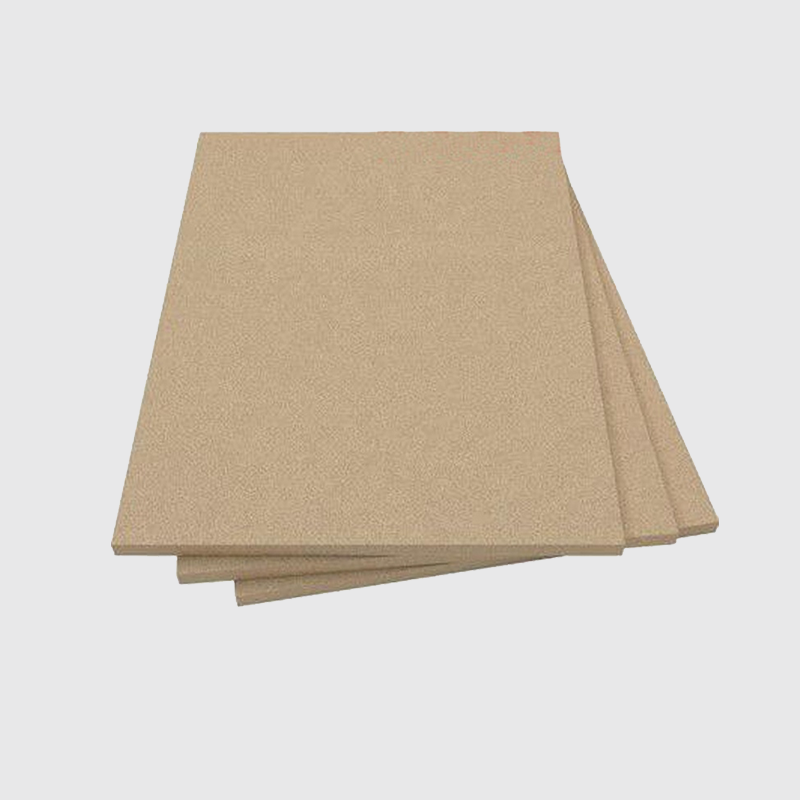
Understanding Fire Resistance Ratings and Global Safety Standards
Fire Resistance Classifications: ASTM E84, UL 723, and Class A/B/C Ratings
When choosing fireproof boards, understanding their fire resistance ratings is pretty much a must. The ASTM E84 standard looks at how quickly flames spread across surfaces, dividing them into three main categories: Class A (0 to 25), which is best; Class B (26 to 75); and Class C (76 to 200). Another important test comes from UL 723 standards that check not just flame spread but also how much smoke materials produce when burning. Products rated Class A like fireproof cement boards typically show very slow flame spread rates under 25 units and generate minimal smoke during combustion tests conducted recently by Underwriters Laboratories.
Structural Fire Safety Standards: ASTM E119, BS 476, and EN 13501
Structural fire safety standards ensure fireproof boards maintain integrity under extreme heat in load-bearing applications:
- ASTM E119: Evaluates wall assemblies for endurance of 1 to 4 hours using controlled furnace exposure
- BS 476: UK-based assessment of insulation performance, structural integrity, and load retention during fire
- EN 13501: European classification system combining reaction-to-fire (A1-F) and resistance ratings (R30—REI 240)
These standards verify that fireproof boards retain critical performance at temperatures exceeding 1,000°F for required durations.
Testing and Certification of Fireproof Board Under Real-World Conditions
Independent testing facilities check how well fireproof boards work by running all sorts of tough experiments. These include subjecting materials to extreme temperature changes from minus 40 degrees Fahrenheit right up to 1500 degrees, keeping them in high humidity conditions at 95% relative humidity for a whole month, and then seeing if they can still hold up after being exposed to actual fire damage. When put through large scale testing scenarios, boards that have passed UL 263 standards typically stay structurally sound for around 94 minutes on average, which actually beats most of the minimum requirements set by building codes around the world. Because materials science keeps evolving so fast, companies need to go through the certification process again every three to five years to make sure their products meet current safety standards and technological advances.
Comparing Types of Fireproof Board: MgO, Gypsum, Cement, and Calcium Silicate
Overview of Common Fire-Resistant Board Materials and Their Composition
Most fireproof boards get their resistance from mineral-based cores. Take magnesium oxide boards for instance, they mix MgO with various reinforcing fibers which gives them both high density and surprisingly good lightweight properties. Then there are gypsum boards that sandwich calcium sulfate dihydrate between layers of paper. For cement boards, manufacturers typically combine Portland cement with cellulose fibers. Another option is calcium silicate boards made from a mix of quartz, lime plus some reinforcement materials that help deflect heat better. What these different types have in common is that they resist fire because of their inorganic makeup instead of relying on chemical additives. But let's be honest, how well they actually perform can vary quite a bit depending on the specific application and environmental conditions.
MgO vs. Fire-Rated Gypsum Board: Heat Resistance, Moisture Performance, and Durability
MgO boards outperform gypsum across key metrics:
- Heat resistance: Withstands over 1,200°C without failure, compared to gypsum’s typical 1-hour rating at 400—600°C
- Moisture stability: Absorbs less than 0.5% water, making it ideal for high-humidity environments where gypsum degrades above 85% RH
- Durability: Offers service life exceeding 50 years in stable conditions, far beyond gypsum’s 15—20 year expectancy
This makes MgO particularly suitable for demanding residential and commercial applications.
Cement and Calcium Silicate Boards: Performance in High-Temperature Industrial Environments
Cement boards provide cost-effective fire separation in industrial settings, enduring sustained temperatures of 300—400°C. Calcium silicate excels in thermal insulation, delaying heat transfer by 40—60 minutes in furnace tests. However, limitations exist:
- Cement boards are prone to cracking under rapid temperature changes exceeding 200°C/hour
- Calcium silicate can lose 30—50% of its compressive strength when exposed to 800°C
Despite these constraints, both remain viable options depending on operational demands.
Addressing Misleading Claims: What “Non-Combustible” Really Means for Fireproof Board
While all discussed materials meet ASTM E136’s basic non-combustibility criteria, true fireproofing requires broader compliance. A genuinely non-combustible fireproof board must satisfy three conditions:
- Flame spread index ≤25 (per ASTM E84)
- No sustained flaming after ignition source removal
- Heat release rate ≤20 kW/m² during 30-minute testing
Only MgO and select calcium silicate boards consistently meet all three benchmarks across global standards, underscoring the importance of multi-dimensional certification.
Fireproof Board in Construction: Meeting Code Requirements Across Applications
Building Code Compliance for Fire-Resistant Materials in Commercial Construction
Fireproof boards are essential for commercial buildings, and they need to meet certain standards such as ASTM E119 for structural endurance and NFPA 286 regarding fire growth characteristics. A recent look at the industry in 2023 showed that nearly four out of five construction holdups happened because of problems with flame spread ratings or paperwork issues. The International Building Code actually requires that building materials can handle temperatures exceeding 1,000 degrees Fahrenheit for anywhere between one to four hours depending on what kind of space we're talking about. Following the ASTM E84 guidelines for surface burning along with regular checks by independent inspectors doesn't just keep everyone within legal boundaries it also makes sure people staying in these buildings stay safe during emergencies.
Residential, Commercial, and Industrial Applications of Certified Fireproof Board
Certified fireproof board is used across sectors:
- Residential: 30-minute fire-rated partitions in multifamily buildings to separate units
- Commercial: Firestopping in HVAC shafts and elevator enclosures
- Industrial: High-density calcium silicate protecting steel structures in refineries and plants
A 2024 UL study found industrial-grade fireproofing reduced fire-related facility downtime by 62% through effective compartmentalization.
Case Study: Retrofitting an Industrial Warehouse With Compliant Fireproof Board
A 120,000 sq ft warehouse upgraded to Class A magnesium oxide boards, achieving:
- 4-hour fire rating for load-bearing columns (exceeding ASTM E119’s 3-hour minimum)
- 40% reduction in insurance premiums after recertification
- Compliance with EN 13501-1 smoke density limits
The retrofit resolved 12 prior code violations, demonstrating how modern fireproof board can address legacy safety gaps efficiently.
Key Benefits and Market Trends Driving Demand for High-Performance Fireproof Board
Safety, Longevity, and Regulatory Compliance: Core Advantages of Quality Fireproof Board
Fireproof boards that perform at high levels bring real advantages both for safety and wallet considerations. The ones certified against ASTM E84 and EN 13501 standards cut down on how fast flames can spread by around 90 percent when compared to regular building materials, based on recent 2024 tests looking at fire safety. When exposed to intense heat conditions, these specialized boards hold together structurally between 45 to 75 minutes long enough to give people time to get out safely during emergencies. Another plus point is their resistance to moisture which means they last about 40% longer in places with lots of humidity. This extended lifespan translates into lower repair bills over time, especially important for commercial buildings or industrial facilities located in coastal areas where dampness tends to be a problem year round.
Regulatory pressure drives adoption: 78% of architects now specify fireproof board in critical zones like egress paths and elevator shafts. A Verified Market Reports analysis forecasts the global market to reach $10.1 billion by 2028, growing at 6.4% annually due to stricter building codes.
Trend: Rising Demand for Multi-Certified Fireproof Board in Green and Sustainable Building Projects
Sustainability and fire safety increasingly intersect in material selection. Over 60% of contractors prioritize boards with dual certifications—UL GREENGUARD for indoor air quality and ISO 14001 for sustainable manufacturing—based on 2023 construction surveys. Such materials support LEED v4.1 compliance, contributing up to 12% of a project’s total sustainability score.
Lightweight MgO boards exemplify this shift, offering Class A fire performance with 30% lower embodied carbon than traditional gypsum. Cities like San Francisco now mandate such materials in public infrastructure, accelerating adoption of fireproof solutions that enhance both safety and environmental resilience.
FAQ Section
What are the key standards for fire resistance ratings?
Key standards include ASTM E84, UL 723, ASTM E119, BS 476, and EN 13501, each assessing different aspects of fire resistance and structural integrity.
How do MgO boards compare to gypsum boards?
MgO boards outperform gypsum boards in heat resistance, moisture stability, and durability, making them ideal for challenging environments.
Are all fireproof boards considered non-combustible?
Not necessarily. Truly non-combustible boards must meet multiple criteria, including flame spread index and heat release rate benchmarks.
What applications are suitable for fireproof boards?
Fireproof boards are used in various applications, including residential partitions, commercial firestopping, and industrial structural protection.
Table of Contents
- Understanding Fire Resistance Ratings and Global Safety Standards
-
Comparing Types of Fireproof Board: MgO, Gypsum, Cement, and Calcium Silicate
- Overview of Common Fire-Resistant Board Materials and Their Composition
- MgO vs. Fire-Rated Gypsum Board: Heat Resistance, Moisture Performance, and Durability
- Cement and Calcium Silicate Boards: Performance in High-Temperature Industrial Environments
- Addressing Misleading Claims: What “Non-Combustible” Really Means for Fireproof Board
- Fireproof Board in Construction: Meeting Code Requirements Across Applications
- Key Benefits and Market Trends Driving Demand for High-Performance Fireproof Board
- FAQ Section