 EN
EN

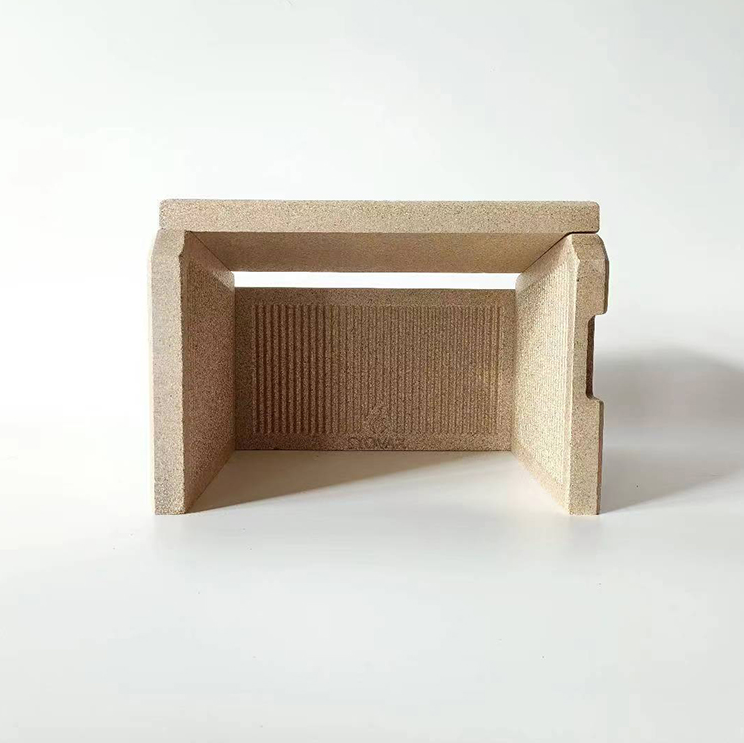
Industrial Vermiculite Fire Board and the Shift Toward Safer Heat Barriers
Industrial vermiculite fire board has moved from a niche refractory product to a mainstream choice for plants that need reliable heat containment without the hazards linked to older materials. The board starts as expanded vermiculite, a layered mineral that pops like popcorn when heated. Binders and pressing turn that expanded flake into rigid panels. The result is a lightweight, non combustible board that can be cut and fitted around ladles, aluminum cells, furnace doors, fireplaces, and building penetrations. Demand comes from steel, aluminum, heat treatment, construction, and energy equipment. Regulations on fire safety, rising fuel costs, and the retirement of asbestos containing products push buyers to look harder at mineral based boards. Growth is steady, competition is real, and technical fit matters more than brand noise.
Why Thermal Shock Resistance Changes the Buying Decision
Thermal shock is the silent killer of refractory linings. A steel ladle heats and cools in cycles. An aluminum melting cell sees rapid temperature swings. A fireplace or furnace door faces repeated thermal cycling. A board that cracks after a few cycles creates a path for heat and gas. Expanded vermiculite has an advantage here. Its structure contains many small air pockets that absorb strain rather than transmit it. That structure gives industrial vermiculite fire board excellent thermal shock resistance. The board also has low thermal conductivity and low heat storage, which means less energy is tied up in the lining. That kind of field result is why thermal shock resistance often outweighs a lower purchase price.
Comparing Vermiculite Boards with Common Alternatives
Buyers rarely choose in a vacuum. Ceramic fiber boards, calcium silicate boards, and vermiculite boards all compete for the same high temperature spaces. Each has a different balance of density, strength, insulation value, and cost. The table below offers a practical comparison based on typical commercial grades. Values can vary by supplier and formulation, so request test data for the exact product under review.
| Property | Vermiculite Fire Board | Ceramic Fiber Board | Calcium Silicate Board |
|---|---|---|---|
| Typical density, kg/m3 | 400 to 800 | 200 to 400 | 600 to 900 |
| Thermal conductivity, W/mK at 400 C | 0.12 to 0.20 | 0.08 to 0.15 | 0.15 to 0.25 |
| Maximum continuous use, C | 1000 to 1100 | 1200 to 1400 | 950 to 1050 |
| Thermal shock resistance | High | Medium | Low to medium |
| Machinability | Good | Good | Moderate |
| Relative cost index | Medium | High | Medium to high |
The data shows the tradeoffs. Ceramic fiber usually wins on raw insulation value, but it can be more expensive and may require special handling. Calcium silicate offers strength but struggles with rapid cycling. Industrial vermiculite fire board sits in a practical middle ground for many heat containment jobs. Specifiers should treat a vermiculite board like an engineered component, not a commodity. Density affects strength and insulation. Higher density usually means higher crushing strength but also higher heat storage. Thickness affects thermal performance and weight. Dimensional tolerance matters when panels fit into existing steel frames or around curved ladle shells. Accurate, customized dimensions reduce cutting on site and lower installation labor. Buyers should also ask about binder system, moisture content, and maximum service temperature. Honest suppliers will explain where a product fits and where it does not.
A Field Lesson from a Southern Chemical Plant Retrofit
A chemical plant in the southern United States needed to replace failed insulation on a process heater. The original calcium silicate panels had cracked after repeated startup and shutdown cycles. Heat leaked, surface temperatures rose, and maintenance costs climbed. The project team tested several materials. Ceramic fiber board performed well thermally but required careful handling and a higher budget. Industrial vermiculite fire board was selected for the hot face because of its thermal shock resistance and low heat storage. The panels were cut to precise dimensions off site, which shortened the outage. After two years of cycling, the vermiculite board showed no through cracks and the surface temperatures stayed within design limits. The lesson is that matching material behavior to the actual cycling pattern saves money and downtime.
Supply Chain Signals and the Role of Millegap
Market overviews often focus on price per sheet. Experienced buyers look further. They check raw material sourcing, pressing consistency, drying control, and dimensional repeatability. Expanded vermiculite quality varies by ore source and expansion method. A supplier that understands ore, binder, and press settings can keep density and strength within a narrow band. That consistency matters for fabricators who cut panels into complex shapes. Millegap specializes in insulation materials and fire protection vermiculite products, with a focus on user specific system solutions for steel ladles, aluminum melting cells, heating and warming equipment, building construction, and other high temperature applications. The company supports accurate customized dimensions, high crushing strength, low thermal conductivity, and long service life. For buyers navigating a crowded market, Millegap offers a supply chain partner that treats vermiculite board as an engineered solution rather than a generic sheet.