 EN

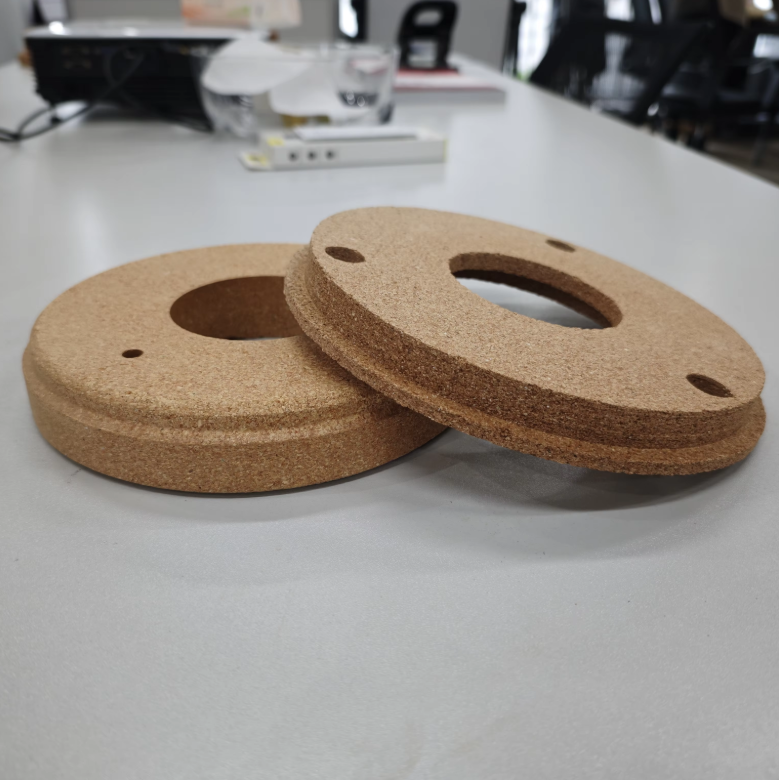
Start With the Failure Mode, Not the Material Label
A fireproof board comparison often starts with a property table. That is backward. The better starting point is the failure mode that matters in the application. A furnace door that cycles twice per shift has a different problem from a passive fire partition that never moves. Vermiculite fire board earns a place in cyclic thermal equipment because it combines noncombustibility with thermal shock tolerance and low heat storage. Calcium silicate, ceramic fiber, and mineral wool boards each solve different problems. Picking a winner without naming the failure mode is guesswork. One rule from field work: if the lining cracks at anchors or spalls at edges, the material may not be the main issue. Joint detail and heat-up schedule often decide the outcome.
Thermal Shock and Crack Behavior Compared
Thermal shock is where vermiculite boards separate from dense refractories. Exfoliated vermiculite forms thin platelets, and an inorganic binder locks them into a matrix that tolerates rapid temperature swings without relying on a rigid, high-expansion skeleton. Ceramic fiber boards handle thermal shock well too, but they trade strength and dust control. Calcium silicate boards are stronger but can crack under repeated rapid shutdowns if restrained. A 2023 retrofit at a copper smelter in southern China showed the pattern. Crews replaced cracked calcium silicate panels around furnace access doors, then watched new cracks open after fast shutdowns. A thicker board did not fix it. The final detail used a vermiculite board with lower heat storage and a revised door frame that allowed slight movement. Material and joint detail worked together.
Strength, Density, and Site Handling
Crushing strength matters on a turnaround. Vermiculite boards cut and drill with less edge crumbling than many low-density fiber boards, so crews spend less time repairing corners. The trade-off is weight. A medium-density vermiculite panel is heavier than ceramic fiber, so anchor spacing and lifting plans must match panel size. Calcium silicate boards are generally stronger and denser, which helps structural backup but adds weight and heat storage. Ceramic fiber boards are light and flexible but generate more dust and need careful handling to avoid compression. The table below gives indicative ranges. Values shift with binder, density, and test temperature, so supplier datasheets decide final selection.
| Property | Vermiculite fire board | Calcium silicate board | Ceramic fiber board |
|---|---|---|---|
| Density, kg/m3 | 600 to 900 | 600 to 1,000 | 200 to 400 |
| Crushing strength, MPa | 5 to 12 | 8 to 15 | 0.2 to 0.8 |
| Thermal conductivity at 600 C, W/m K | 0.14 to 0.20 | 0.12 to 0.18 | 0.10 to 0.16 |
| Thermal shock resistance | Good | Moderate | Excellent |
| Cutting dust | Low to moderate | Moderate | High |
| Heat storage | Low to moderate | Moderate to high | Low |
These ranges are not a ranking. Ceramic fiber can be right when low weight dominates. Calcium silicate can fit high-strength backup. Vermiculite boards sit in a middle zone where moderate strength, low heat storage, and thermal shock tolerance must coexist.
Thermal Conductivity and Heat Storage Side by Side
Low thermal conductivity gets the headline, but heat storage often decides how a cyclic furnace feels. Heat storage depends on density and specific heat. A dense lining soaks up heat during warm-up and releases it during cool-down. A vermiculite board with controlled density can reduce that thermal flywheel effect. The comparison has a catch. Conductivity must be compared at the same mean temperature. A value at 200 C and a value at 600 C are different operating points, not competing claims. Noncombustibility is commonly checked under ASTM E136 or ISO 1182. Thermal conductivity is often measured under ASTM C177 or ISO 8302, and the report should state the mean test temperature. For a furnace door or ladle lid, hot-face temperature, anchor temperature, and shell limit should be checked against prior installations. Vermiculite boards are not a universal replacement for dense hot-face refractories. High abrasion or heavy slag contact may still need a hard face or sacrificial layer.
Moisture, Dust, and Installation Differences
Vermiculite boards can pick up moisture during storage and installation. A controlled dry-out schedule matters on thick sections and enclosed linings. Trapped moisture can cause steam spalling during the first heat-up, and that failure is often blamed on the board rather than the schedule. Ceramic fiber boards are more forgiving on moisture but produce more dust during cutting, which affects site hygiene and worker protection. Calcium silicate boards can be cut cleanly but are heavier and less tolerant of rapid thermal cycling when restrained. Custom-cut panels with accurate dimensions reduce gaps, yet tight tolerances do not replace expansion allowance. Butt joints packed too hard can buckle when the lining heats up. Installation discipline, including anchor torque, washers, clean cuts, and sensible joint layout, often decides whether any board reaches its potential.
Where Alternatives Win and Where Vermiculite Fire Board Fits
The honest answer is that alternatives win in specific conditions. Ceramic fiber boards win when very low weight and very low conductivity dominate. Calcium silicate boards win when high compressive strength and structural backup are the main requirements. Mineral wool boards can fit lower-temperature fire stopping where cost and density favor a different balance. Vermiculite fire board fits cyclic thermal equipment where moderate strength, low heat storage, and thermal shock resistance all matter. Steel ladle lids, aluminum melting cell back-up linings, fireplace surrounds, furnace doors, and passive fire details are typical fits. Limitations should be stated plainly. Service temperatures beyond the binder rating call for a different material. High abrasion or slag contact may require a hard facing. Very low weight targets may favor fiber boards. Bluewind supports custom dimensions, batch consistency, and supply planning for insulation and fire protection vermiculite products. That manufacturing and supply discipline helps buyers compare installed performance, not just a single number on a datasheet.