 EN

What Advanced Service Looks Like for Vermiculite Refractory Board in 2025
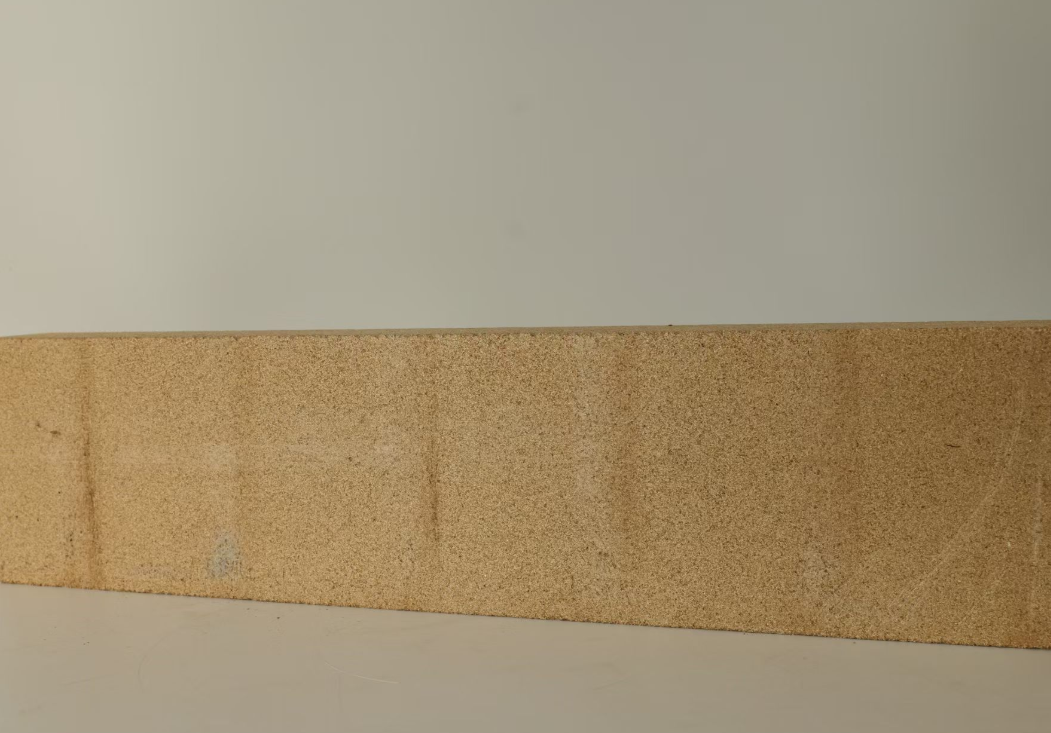
A vermiculite refractory board is no longer just a backup insulation layer behind a hot face. In 2025, plants are pushing furnaces harder, cycling them faster, and experimenting with hydrogen blends, electric boost, and tighter emissions controls. Those changes raise the thermal and mechanical demands on every panel in the lining. A material that only insulates well is not enough. The board has to hold dimensions, resist thermal shock, and survive installation and maintenance without opening gaps.
Exfoliated vermiculite gives the board its base stability. The mineral does not melt or burn at common process temperatures, and the layered structure tolerates rapid expansion and contraction. Binders and density control the rest. Low-density grades insulate well but crush at anchors. High-density grades take abuse but store more heat. In advanced projects, the grade is matched to the local duty, not chosen from a single global specification.
Why Electrification and Hydrogen Blends Change the Lining Conversation
Electric boost and hydrogen co-firing are changing furnace behavior. Flames are often shorter, heat flux is more localized, and control systems cycle power more frequently. A lining that worked with steady natural gas firing may see sharper thermal gradients and more expansion stress. Refractory vermiculite board handles those gradients better than dense brick because it has lower thermal mass and higher thermal shock resistance. It also avoids the fiber handling concerns that come with ceramic fiber in some environments.
The trade-off is conductivity. Vermiculite board does not insulate as well as ceramic fiber at the same thickness. In a hydrogen-ready furnace, that may mean a slightly thicker panel or a hybrid lining. A common approach is a hot-face layer of dense refractory or coating, a middle layer of vermiculite refractory board for stability, and a backup layer of fiber for maximum insulation. That combination manages heat loss, thermal shock, and mechanical load without relying on one material to do everything.
Precision Machining Turns a Board into a System Component
Advanced uses often involve complex geometry. Burner blocks, observation ports, door edges, and modular roof sections need tight tolerances. A vermiculite refractory board can be CNC-machined to match those details, which reduces field cutting and joint width. Narrower joints mean less hot gas bypass and better temperature uniformity.
-
Modules can be pre-cut and labeled for specific locations.
-
Stepped or shiplap joints can be machined into the panel edge.
-
Anchor pockets and fastener clearances can be produced at the shop.
-
Replacement panels can be matched to original drawings.
That level of preparation matters in projects with limited shutdown windows. A panel that arrives ready to install saves labor and reduces the chance of gaps caused by field modifications. It also makes inspection easier because joint locations are predictable.
Matching Grade and Thickness to Mixed Duty Cycles
Not every zone in a furnace sees the same conditions. A door edge may see mechanical impact and rapid cycling. A sidewall may see steady heat and chemical exposure. Using one grade everywhere is rarely optimal.
| Zone or condition | Suggested vermiculite refractory board approach | Key reason |
|---|---|---|
| High-cycle door edges | Medium to high density, machined edges, stainless protection | Resists crushing and impact |
| Burner surrounds | Medium density, tight tolerances, high-temperature sealant | Limits hot gas bypass |
| Continuous sidewalls | Medium density, moderate thickness | Balances insulation and stability |
| Roof modules | Low to medium density, hybrid with fiber backup | Reduces weight and heat storage |
| Chemical exposure zones | Dense grade, sealed surface, sample testing | Limits binder attack |
| Construction fire barriers | Medium density, noncombustible grade | Meets fire separation needs |
Published test methods provide a baseline. ASTM E136 and ISO 1182 address noncombustibility. ASTM C177 and ASTM C518 cover thermal conductivity. EN 13501-1 gives European fire classification. NFPA 86 remains a common reference for furnace safety. Those standards do not replace a trial in the actual atmosphere, but they narrow the field before a full rebuild.
A Field Case from a Dual-Fuel Melting Cell Retrofit
A retrofit at a secondary aluminum plant in the southern United States showed how advanced duty cycles expose weak details. The plant added hydrogen blending to an existing melting cell and increased cycling to match a new production schedule. The original lining used ceramic fiber board behind a castable hot face. After several months, the fiber had compressed near the burner port, and the castable showed hairline cracks. Hot spots appeared on the steel shell.
The maintenance team replaced the burner surround and upper sidewall with medium-density vermiculite refractory board, CNC-cut to fit the existing anchor pattern. A high-temperature sealant was used at the panel edges, and a small expansion gap was left at the steel frame. A stainless wear strip was added at the door edge where mechanical contact occurred. After six months of hydrogen-blended operation, the board held thickness, the hot spots disappeared, and joint gaps remained within design tolerance. The door edge still showed some wear, which confirmed that mechanical protection is separate from thermal performance. That project also showed that vermiculite board is not a cure for every problem. Where chemical flux attack was severe, a dense castable remained the better choice.
Limits, Supply Realities, and the Role of Fabrication Support
Vermiculite refractory board has limits. It is heavier than fiber, so weight-sensitive roofs may need a hybrid design. It is not immune to strong alkalis, certain fluxes, or molten reactive metals. Moisture pickup during long shutdowns can soften some grades. Those limits should be designed around, not ignored.
Supply and fabrication also matter in 2025. Advanced projects often need small batches, short lead times, and documented consistency. Batch traceability for density, compressive strength, and thermal conductivity helps maintenance teams compare replacement panels with the original specification. In-house machining and system-level support reduce the risk of mismatched joints and field errors.
For projects that need reliable vermiculite refractory board components, Millegap supports manufacturing, distribution, and user-specific system solutions across steel ladle, aluminum melting, heating equipment, fireplace, furnace, and construction applications. Batch traceability and supply chain coordination help keep specifications consistent from first article to repeat order. The board itself is only part of the result. How it is graded, machined, installed, and maintained decides whether it performs in advanced service.
Table of Contents
- What Advanced Service Looks Like for Vermiculite Refractory Board in 2025
- Why Electrification and Hydrogen Blends Change the Lining Conversation
- Precision Machining Turns a Board into a System Component
- Matching Grade and Thickness to Mixed Duty Cycles
- A Field Case from a Dual-Fuel Melting Cell Retrofit
- Limits, Supply Realities, and the Role of Fabrication Support