 EN
EN

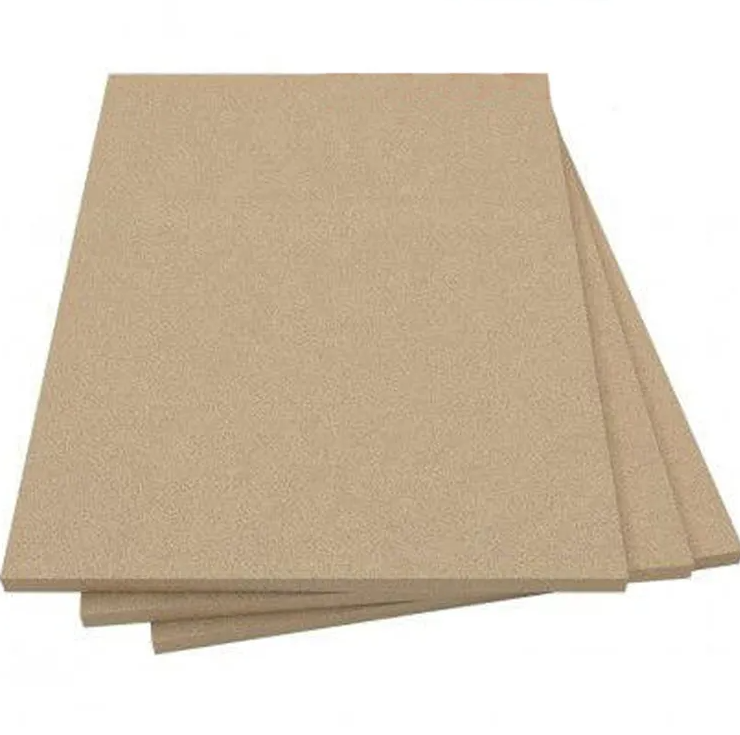
Understanding What Drives Value in a Fire Board
A vermicullite fire board is not just a piece of insulation. It is a component inside a system that has to handle heat, cycling, mechanical movement, and sometimes chemical exposure. Value comes from how well that board performs over time, not from a single number on a data sheet. A board with low thermal conductivity saves energy, but if it cracks after a few thermal cycles, the savings disappear. A board with high crushing strength survives handling, but if it stores too much heat, startup times get longer. The real goal is balance. That balance starts with understanding the actual service conditions. Temperature range, heating and cooling rates, atmosphere, load, and the fixing method all shape what the board needs to do. Without that context, any comparison is just guesswork.
Matching Board Properties to Real Service Conditions
Vermiculite fire boards offer a useful mix of properties. They resist thermal shock, hold their shape, and do not feed a fire. Low heat storage helps when equipment cycles on and off. Low thermal conductivity reduces heat loss through the lining. High crushing strength makes the board easier to handle and install without edge damage. Accurate dimensions reduce gaps at joints, and those gaps are often where failures begin. Industry standards such as ASTM C177 and ISO 8302 describe how to measure steady state heat flow. EN 13501-1 and ASTM E136 are common references for non combustibility. A properly formulated board can meet A1 or equivalent non combustible performance, but the binder and density still affect real world behavior. Honest evaluation means looking at the whole picture, not just one property.
A Field Lesson from a Steel Ladle Cover Replacement
A steel plant in eastern China replaced a ladle cover lining after repeated cracking near the edge. The original board had good conductivity numbers but low crushing strength. During installation, corners broke, and the gaps were filled with a different material. Those gaps became hot spots. The replacement used a vermiculite fire board with higher crushing strength and tighter dimensional tolerances. The crew also changed the anchor pattern and added a controlled expansion joint. After several heat cycles, the lining held together. This case does not prove that one board works everywhere. It does show that installation details and board strength matter as much as thermal data. Similar lessons show up in aluminum melting cells, fireplace surrounds, and furnace enclosures. The material only delivers value when the whole detail is designed properly.
Comparing Vermiculite Fire Board with Other Lining Options
Lining choices usually involve trade offs. The table below gives indicative values. Project specific data is still needed because binders and manufacturing methods vary.
| Material | Typical thermal conductivity W/mK | Typical density kg/m3 | Heat storage behavior | Fire class reference |
|---|---|---|---|---|
| Vermiculite fire board | 0.12 to 0.20 | 400 to 800 | Low to moderate | A1 or non combustible |
| Calcium silicate board | 0.15 to 0.25 | 800 to 1000 | Moderate to high | A1 or non combustible |
| Mineral wool board | 0.035 to 0.045 | 40 to 150 | Low | A1 |
| Refractory brick | 0.8 to 1.4 | 1800 to 2400 | High | A1 |
Vermiculite fire board sits in a middle ground. It is not the lowest conductivity option, and it is not the cheapest. It earns its place when fire performance, thermal shock resistance, crushing strength, and dimensional accuracy need to work together. A board that is easy to cut and fit also reduces labor and waste on site.
Installation Details That Decide Long Term Performance
Even a great board can fail if the installation is rushed. Several details deserve attention:
-
Anchors should be spaced and sized for the expected movement.
-
Expansion joints should allow the board to grow without buckling.
-
Cut edges should be sealed or protected where hot gas can reach them.
-
The board should not be forced into place or over compressed.
-
Storage before installation should keep the board dry and flat.
A supplier that understands these details can help avoid callbacks. Samples and trial sections often reveal more than a catalog. In high vibration areas, mechanical fasteners need extra attention. In chemical environments, the binder system should be checked for compatibility. These are normal engineering steps, not signs of weakness.
Working with a Supplier That Supports System Solutions
Getting maximum value from a vermiculite fire board is easier when the supplier understands the application, not just the product. Millegap focuses on manufacturing and distributing insulation and fire protection vermiculite products, with a strong emphasis on user specific system solutions. Millegap supports industrial and construction applications with custom dimensions, quality control, and supply chain coordination. That kind of support helps specifiers move from a generic board to a detail that performs in the field. Value comes from fewer failures, less rework, and a lining that lasts through real cycles. A supplier that can talk about anchors, joints, and service conditions is worth more than one that only quotes a price.
Table of Contents
- Understanding What Drives Value in a Fire Board
- Matching Board Properties to Real Service Conditions
- A Field Lesson from a Steel Ladle Cover Replacement
- Comparing Vermiculite Fire Board with Other Lining Options
- Installation Details That Decide Long Term Performance
- Working with a Supplier That Supports System Solutions