 EN
EN

What a Boiler Lining Actually Has to Survive
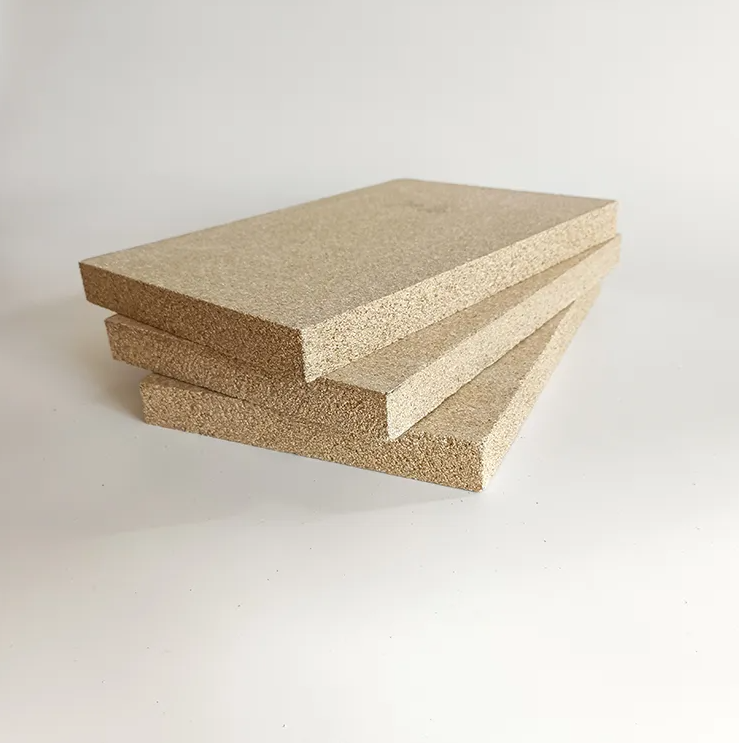
Boiler linings live in a rough place. Heat comes from one side, cooling air or shutdown cycles hit the other, and the lining has to hold its shape while metal parts expand and contract. A boiler vermiculite board gets picked for that kind of duty because it combines fire resistance with low heat storage and decent thermal shock resistance. The board is not just a barrier. It is part of a system that includes anchors, expansion joints, seals, and the way the lining is supported. If any of those details are wrong, even a good board can fail. That is why evaluation should start with the service conditions, not with a catalog number.
How Vermiculite Board Handles Heat and Cycling
Vermiculite is expanded mica. The expansion creates a layered, porous structure that slows heat flow and keeps the board light. Low thermal conductivity means less heat escapes through the lining. Low heat storage means the lining does not soak up a huge amount of energy during startup. That helps when a boiler cycles. A dense board may take longer to heat up and release heat later, which can raise thermal stress at the hot face. Thermal shock resistance matters because boilers do not always heat and cool slowly. Standard test methods such as ASTM C177 and ISO 8302 are used to measure steady state heat flow. EN 13501-1 and ASTM E136 are common references for non combustibility. A properly made vermiculite board can meet A1 or equivalent non combustible criteria, but the binder and density still affect performance.
A Field Case from a Steam Header Retrofit
A retrofit at a chemical plant in southern China offers a useful picture. The existing lining near a steam header had cracked after several shutdown cycles. The crack was small, but it let hot gas reach a support steel member. Engineers replaced the damaged section with custom cut boiler vermiculite board, added a stepped joint, and adjusted the anchor spacing. After a full maintenance cycle, the new lining held its dimensions. No new cracking showed up at the hot face. This case does not mean vermiculite board solves every lining problem. It does show that accurate dimensions and thermal shock resistance can reduce weak points. The same logic applies to steel ladle covers, aluminum melting cells, fireplace surrounds, and furnace enclosures. The material works best when the whole detail is designed together.
Comparing Vermiculite Board with Common Lining Options
Lining choices usually come down to a trade off between conductivity, density, fire performance, and cost. The table below gives indicative values. Project specific data still matters because binders and manufacturing methods vary.
| Material | Typical thermal conductivity W/mK | Typical density kg/m3 | Heat storage behavior | Fire class reference |
|---|---|---|---|---|
| Vermiculite board | 0.12 to 0.20 | 400 to 800 | Low to moderate | A1 or non combustible |
| Calcium silicate board | 0.15 to 0.25 | 800 to 1000 | Moderate to high | A1 or non combustible |
| Mineral wool board | 0.035 to 0.045 | 40 to 150 | Low | A1 |
| Refractory brick | 0.8 to 1.4 | 1800 to 2400 | High | A1 |
Vermiculite board sits in a middle ground. It is not the lowest conductivity option, and it is not the cheapest. It earns its place when fire performance, thermal shock resistance, crushing strength, and dimensional accuracy need to work together. A high crushing strength board also survives handling and installation better than a fragile one, which matters on busy job sites.
Where Vermiculite Board Makes Sense and Where It Does Not
Boiler vermiculite board is a good fit for many industrial and building service applications. It can be used in boiler linings, furnace enclosures, fireplace surrounds, steel ladle covers, and aluminum melting cell components. It also works in fire rated building details where non combustibility and low heat storage are useful. Limitations should be stated honestly. Vermiculite board is not a structural material. It should not be expected to carry heavy loads without proper support. It is also not the best choice when the goal is the absolute lowest thermal conductivity. Mineral wool wins there. Chemical resistance depends on the binder and the environment, so a compatibility check is smart before installation. In high vibration areas, the fixing method needs extra attention. These are normal engineering constraints, not reasons to avoid the material.
Specifying Boiler Vermiculite Board Without Overpromising
Specification should start with temperature, cycling pattern, atmosphere, mechanical load, and the fixing method. Samples and trial sections can reveal more than a data sheet. A supplier that understands how the board will be cut, anchored, sealed, and supported can help avoid callbacks. Millegap focuses on manufacturing and distributing insulation and fire protection vermiculite products, with a strong emphasis on user specific system solutions. Millegap supports industrial and construction applications with custom dimensions, quality control, and supply chain coordination. That kind of support helps specifiers move from a generic board to a lining detail that holds up in the field.
Table of Contents
- What a Boiler Lining Actually Has to Survive
- How Vermiculite Board Handles Heat and Cycling
- A Field Case from a Steam Header Retrofit
- Comparing Vermiculite Board with Common Lining Options
- Where Vermiculite Board Makes Sense and Where It Does Not
- Specifying Boiler Vermiculite Board Without Overpromising