 EN
EN

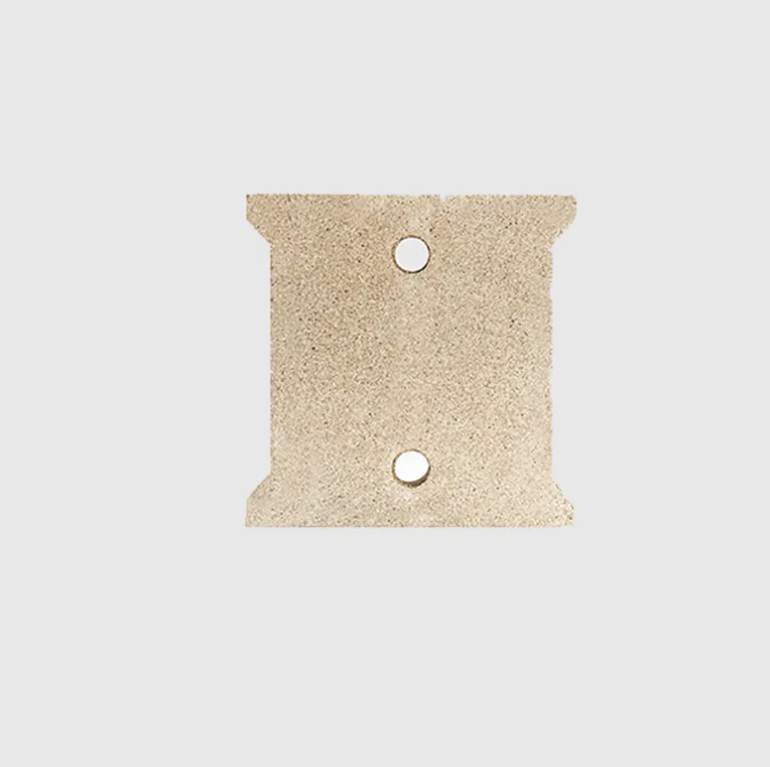
Why Vermiculite Sheets Keep Showing Up in Tough Construction Details
Modern construction keeps asking materials to do more than one job. A wall or enclosure may need fire resistance, thermal isolation, dimensional stability, and a reasonable installed cost. A vermiculite sheet often enters the conversation when those demands overlap. Vermiculite is a hydrated phyllosilicate mineral. When heated, it expands into a lightweight, layered structure. That expanded material gets bonded into boards and sheets for fire protection and insulation. Unlike many organic fillers, vermiculite does not feed a fire. It also handles repeated heating and cooling without the same cracking risk seen in some brittle boards. For steel ladles, aluminum melting cells, fireplaces, furnaces, and building service enclosures, that combination is practical rather than exotic.
The Thermal Physics Behind a Thin Fire Barrier
The useful behavior of a vermiculite sheet comes from low thermal conductivity, low heat storage, and strong thermal shock resistance. Heat moves slowly through the porous, layered structure, and the sheet itself does not store a large amount of heat. That matters in cyclic equipment. A fireplace or furnace heats up, cools down, and repeats. A material with high heat storage pulls energy into its mass, then releases it later. A material with low heat storage responds faster and reduces thermal lag around the hot face. ASTM C177 and ISO 8302 describe guarded hot plate methods for measuring steady state heat flow. EN 13501-1 and ASTM E136 are widely used to classify non combustibility. A vermiculite sheet typically reaches A1 or equivalent non combustible performance when properly formulated.
| Material | Typical thermal conductivity W/mK | Typical density kg/m3 | Heat storage behavior | Fire class reference |
|---|---|---|---|---|
| Vermiculite sheet | 0.12 to 0.20 | 400 to 800 | Low to moderate | A1 or non combustible |
| Calcium silicate board | 0.15 to 0.25 | 800 to 1000 | Moderate to high | A1 or non combustible |
| Gypsum board | 0.17 to 0.25 | 600 to 900 | Moderate | A2 to B |
| Mineral wool | 0.035 to 0.045 | 40 to 150 | Low | A1 |
These numbers are indicative, not a substitute for project specific data. Density, binder, and manufacturing method shift performance. The table shows why vermiculite sheets sit in a useful middle ground.
Where Vermiculite Sheets Earn Their Keep on Site
Field experience often reveals more than a catalog sheet. During a retrofit at a chemical plant in southern China, engineers found that a calcium silicate board near a high temperature pipe flange had cracked after several thermal cycles. The crack opened a small gap, and the gap became a hot spot. The replacement used custom cut vermiculite sheets with mechanical fasteners and a stepped joint detail. After one full maintenance cycle, the assembly held its dimensions and showed no new cracking. That case does not prove vermiculite sheets work everywhere. It does show that thermal shock resistance and accurate dimensions matter when equipment moves, expands, and contracts. Similar logic applies to steel ladle covers, aluminum cell linings, fireplace surrounds, and fire rated building penetrations.
Custom Sizing and Crushing Strength Reduce Callbacks
A sheet that arrives at the exact size saves more than labor. It changes how the joint behaves. Field cutting can leave dust, ragged edges, and inconsistent gaps. Those gaps become weak points in a fire or thermal barrier. A factory cut vermiculite sheet with high crushing strength can be handled, stacked, and installed without crumbling at the corners. That matters on sites where access is tight and crews work around live equipment. Three practical benefits show up again and again:
-
Fewer cut pieces and less site waste.
-
Tighter joints that support better fire and thermal performance.
-
Less risk of edge damage during transport and installation.
A supplier that holds tolerances and understands how the sheet will be fixed, sealed, and supported makes those benefits real.
The Business Case for Specifying Vermiculite Sheets Early
The financial argument for vermiculite sheets is usually about avoided problems. A failed fire barrier can trigger re inspection, schedule delays, and compliance questions. A cracked insulation board near a furnace can force an unplanned shutdown. Those events cost far more than the material delta between a basic board and a vermiculite sheet. Insurance reviews and building codes increasingly ask for documented non combustibility and traceable test data. EN 13501-1 and ASTM E136 give project teams a common reference. Still, honesty matters. Vermiculite sheets are not the lowest cost option, and they are not the best choice when the goal is the absolute lowest thermal conductivity. Mineral wool wins on pure conductivity. Vermiculite sheets win when fire performance, thermal shock resistance, compression strength, and dimensional accuracy need to work together.
Matching the Material to Real Service Conditions
Selection should start with service temperature, thermal cycling, mechanical load, chemical exposure, and the fixing method. A fireplace surround has different demands from a steel ladle cover. A building penetration seal has different demands from an aluminum melting cell. Samples and trial installations can reveal more than a data sheet. Millegap focuses on manufacturing and distributing insulation and fire protection vermiculite products, with a strong emphasis on user specific system solutions. Millegap supports industrial and construction applications with custom dimensions, quality control, and supply chain coordination. That kind of support helps specifiers move from a generic board to a detail that works in the field.
Table of Contents
- Why Vermiculite Sheets Keep Showing Up in Tough Construction Details
- The Thermal Physics Behind a Thin Fire Barrier
- Where Vermiculite Sheets Earn Their Keep on Site
- Custom Sizing and Crushing Strength Reduce Callbacks
- The Business Case for Specifying Vermiculite Sheets Early
- Matching the Material to Real Service Conditions