 EN
EN

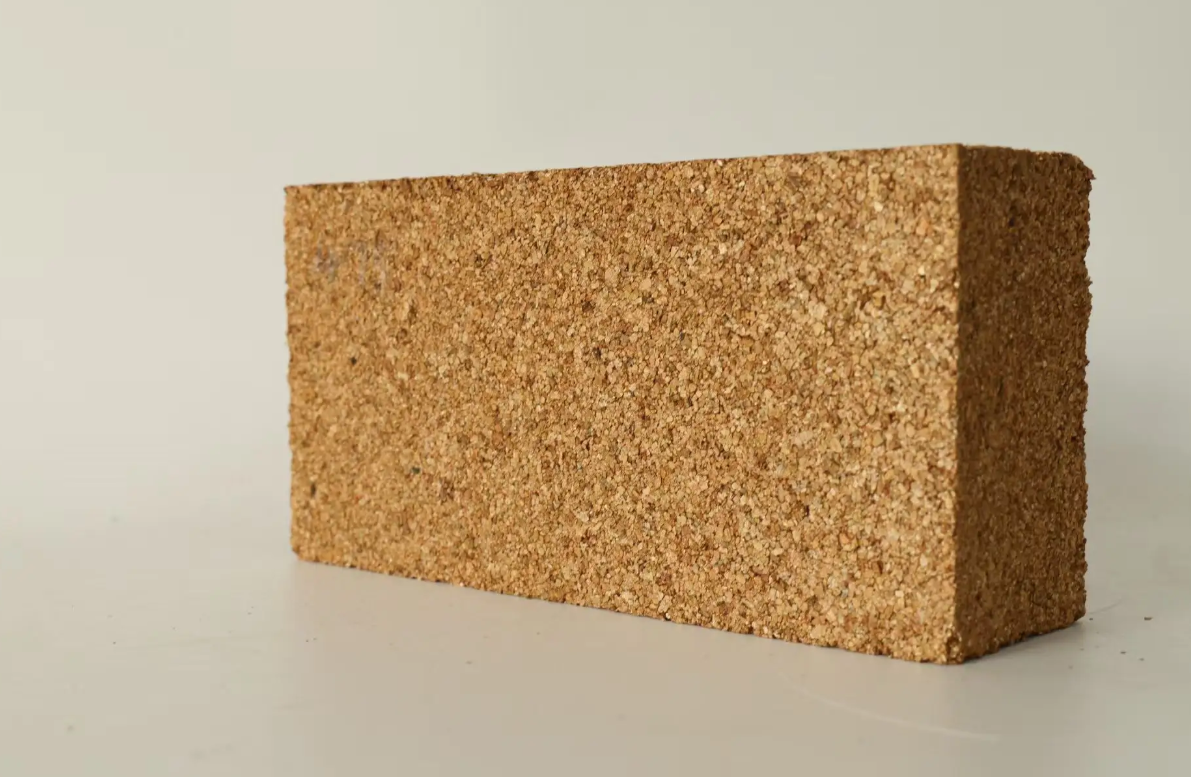
Understanding the A1 Non-Combustible Rating and Regulatory Compliance
What A1 (EN 13501-1) means for vermiculite fireproof boards—and why it matters more than 'fire retardant' labels
An A1 rating under EN 13501-1 signifies complete non-combustibility: the material does not ignite, sustain flame, emit significant smoke, or produce flaming droplets—even when exposed to furnace temperatures exceeding 800 °C. Vermiculite fireproof boards achieve this top-tier classification because their inorganic, mineral-based composition contains no fuel source for combustion. This is fundamentally distinct from “fire retardant” materials, which rely on chemical additives to delay ignition but will still burn, contribute heat and smoke, and propagate flame under sustained fire exposure. In critical applications—such as fire walls, protected escape routes, and structural cores—relying on fire-retardant labelling instead of verified A1 certification introduces unacceptable risk. Specifying A1-certified vermiculite fireproof boards ensures compliance with the most stringent European fire-safety requirements and eliminates ambiguity in performance expectations.
Key standard alignments: IS 14871, NFPA 255, and BS 476 Part 4—how vermiculite fireproof boards satisfy global structural fire testing protocols
Vermiculite fireproof boards also meet major international non-combustibility standards beyond EN 13501-1. Under India’s IS 14871, they demonstrate no flame spread, no sustained flaming, and minimal temperature rise. In North America, they achieve Class A surface-burning performance per NFPA 255—with a flame-spread index of zero. And under the UK’s BS 476 Part 4, they pass the vertical furnace test with no flaming on any surface. These consistent results stem from the absence of organic binders—eliminating potential ignition sources across all test methods. This multi-standard alignment enables seamless specification across projects governed by Indian, American, or British building codes, without requiring redundant re-testing or performance compromises.
Real-World Fire Performance: Beyond Lab Ratings
The lab-to-field gap: Why some vermiculite fireproof boards pass A1 but underperform in flame-spread or sustained heat exposure
While EN 13501-1’s A1 classification confirms a material’s inherent non-combustibility, it does not guarantee system-level fire resistance in real-world conditions. Laboratory tests follow controlled temperature curves and assume ideal assembly integrity—conditions rarely replicated in actual fires, where variables like fire load, ventilation dynamics, and prolonged thermal stress significantly alter behaviour. A board may pass A1 because its raw material won’t burn, yet fail in service if gaps open, joints degrade, or thermal stress weakens its binder matrix—allowing flame bypass or premature structural failure. Because A1 assesses material combustibility—not assembly performance—specifiers must go further: verify fire-resistance ratings through UL 1709 hydrocarbon curve testing or full-scale assembly tests (e.g., UL 263, EN 1366), which better simulate real fire exposure and thermal response.
Critical installation factors—gaps, joints, fixings, and substrate compatibility—that determine actual fire integrity
Even an A1-rated board delivers compromised fire integrity when installed incorrectly. Gaps between boards create direct flame paths; unsealed or uninsulated joints become thermal weak points; and improperly spaced metal fixings can conduct heat into the protected side. Substrate compatibility is equally decisive—a board fixed directly to combustible framing may ignite the backing material, undermining compartmentation. No laboratory test accounts for these field variables. Therefore, manufacturers must supply verified, application-specific installation guidance—and contractors must follow it rigorously. Third-party inspection and documented quality assurance are essential to ensure that the installed assembly delivers the fire resistance promised by testing.
Optimizing Vermiculite Fireproof Boards for Specific Applications
Fire doors and partitions: Achieving 90–120-minute integrity with verified UL 10B/10C performance data
Vermiculite fireproof boards serve as high-performance core materials in fire-rated doors and partitions, delivering verified 90–120 minute integrity and insulation under UL 10B/10C testing. Their lightweight yet dimensionally stable composition supports reliable operation during fire events while maintaining ease of fabrication and installation. When integrated into tested assemblies, they meet global standards including BS 476 and EN 1366—enabling robust compartmentalization in life-critical facilities such as hospitals, airports, and high-rise residential buildings. This performance directly extends safe egress time and protects structural elements during emergency evacuation.
Chimneys, ductwork, and industrial enclosures: Thermal barrier design using vermiculite fireproof boards in high-heat petrochemical environments
In petrochemical and other high-heat industrial settings, vermiculite fireproof boards function as effective thermal barriers for chimneys, ductwork, and equipment enclosures. With thermal conductivity below 0.12 W/m·K at 200 °C—and capable of withstanding peak temperatures exceeding 1100 °C—their exfoliated microstructure creates insulating air pockets that resist both conductive and radiative heat transfer. Engineered with appropriate thickness and density, these boards delay substrate temperature rise long enough to prevent critical failure, extending equipment service life by up to 40% in demanding hydrocarbon fire scenarios.
Thickness, Density, and Thermal Insulation: Engineering Fire Resistance
How thickness (12–50 mm) and density interact to extend fire resistance—evidence from UL 1709 hydrocarbon curve testing
Fire resistance duration under extreme thermal loads depends critically on the interplay of thickness and density. UL 1709 hydrocarbon curve testing—which simulates rapid, high-intensity fires—shows that vermiculite boards at 25 mm thickness and ≥850 kg/m³ density consistently achieve 90 minutes of structural integrity. Increasing thickness to 50 mm extends protection to 120+ minutes, while lower-density variants (<700 kg/m³) at the same thickness fail integrity up to 30% faster due to accelerated heat penetration. This synergy allows engineers to tailor fire-resistance performance precisely—balancing thermal protection, weight constraints, and structural integration.
Low thermal conductivity (<0.12 W/m·K at 200°C): Why exfoliated vermiculite’s microstructure delays conductive and radiative heat transfer to substrates
Exfoliated vermiculite’s ultra-low thermal conductivity—below 0.12 W/m·K even at 200 °C—originates in its natural layered microstructure. During fire exposure, expanded mineral platelets trap inert air, creating highly effective insulating pockets that suppress conductive heat flow. Simultaneously, the reflective crystalline surfaces scatter radiant energy. This dual-action mechanism significantly delays substrate temperature rise—preserving structural integrity longer than many synthetic alternatives. Independent verification confirms this performance persists throughout fire exposure, directly supporting the verified fire-resistance ratings used in industrial and infrastructure applications.