 EN
EN

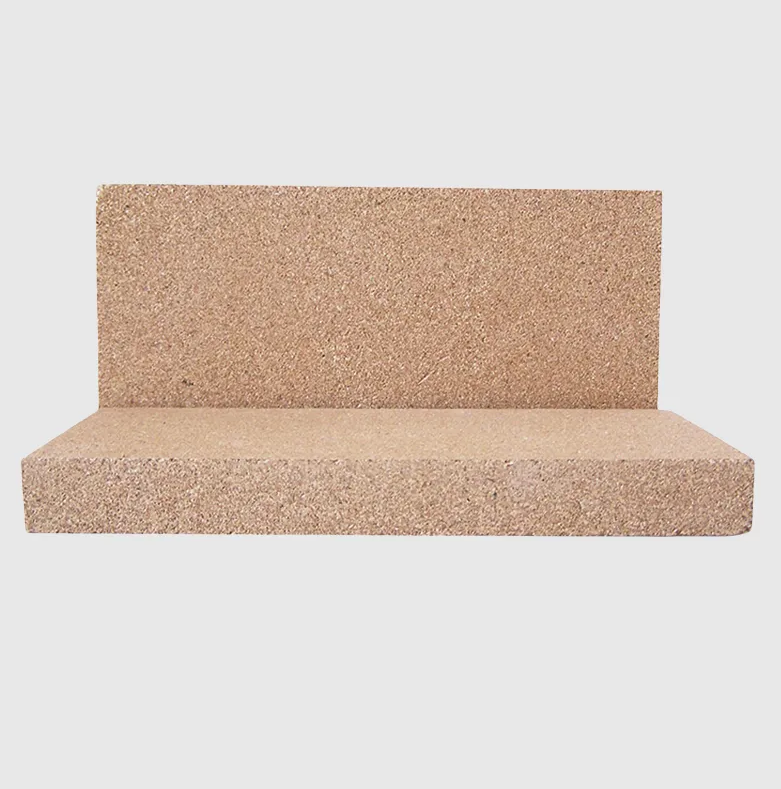
Why Vermiculite Insulation for Industry Remains a Strategic Choice in 2025
Vermiculite insulation for industry continues to deliver exceptional thermal performance in high-temperature environments, maintaining its relevance through proven efficiency and safety metrics. With an R-value of 2.13 per inch, it outperforms traditional fiberglass and cellulose alternatives in industrial settings—reducing energy consumption by up to 25% according to recent facility audits. Its natural fire resistance, verified by ASTM E84 and UL 723 Class A ratings (flame spread ≤25, smoke developed ≤50), provides critical passive fire protection in structural cavities and plenum spaces without toxic off-gassing. Modern asbestos-free certification under ISO/IEC 17025 protocols ensures compliance with 2025 EPA and OSHA regulations, while its moisture-resistant properties prevent mold growth in humid processing areas. As construction and industrial insulation segments drive over 60% of vermiculite demand, facilities managers increasingly prioritize its combination of thermal efficiency, fire safety, and regulatory compliance for energy-intensive operations.
Optimizing Industrial Applications: Attics, Wall Cavities, and High-Volume Thermal Zones
Achieving maximum performance from vermiculite insulation requires careful attention to application technique—not just material selection. In industrial attics and plenum spaces, loose-fill vermiculite is best applied using pneumatic equipment to ensure uniform distribution and consistent depth. Because the material settles over time, installers should add 10–15% extra depth during installation to maintain long-term thermal integrity and avoid voids that compromise efficiency across large horizontal zones. Containment barriers are essential to prevent granule migration into HVAC systems or other sensitive infrastructure.
For bulk thermal mass and fire-resistive cavity fills, coarse-grade vermiculite is optimal. Its larger particle structure supports stable R-2.13/inch performance, enhances sound dampening across walls, and delivers inherent non-combustibility—critical for passive fire protection. When filling large wall cavities or high-volume areas, pour the material in controlled lifts to prevent bridging, which can leave thermally inefficient air pockets. Verified use cases include steel-deck roof assemblies and multi-story commercial buildings where non-combustible, fire-rated cavity fills are mandated by code—particularly around chimneys, ductwork, and vertical shafts.
Proven Performance: Thermal Efficiency, Acoustic Dampening, and Passive Fire Protection
R-2.13/inch real-world energy savings vs. fiberglass and cellulose in industrial settings
Vermiculite maintains a consistent R-2.13 per inch across temperature ranges and over decades—unlike fiberglass, which degrades in cold conditions, or cellulose, which compresses and settles significantly over time. Industrial facilities report up to 15% reduction in HVAC loads after switching to loose-fill vermiculite in attics and cavity walls. Its granular density also contributes meaningfully to acoustic dampening, reducing sound transmission between production, control, and office zones without requiring supplemental soundproofing layers.
ASTM E84/UL 723 test data and verified use cases in fire-rated floor/ceiling assemblies
Independent testing under ASTM E84 and UL 723 confirms vermiculite achieves Class A fire performance—flame spread ≤25 and smoke developed ≤50—making it suitable for fire-rated floor/ceiling assemblies. In these applications, vermiculite functions as a passive fire barrier: slowing flame propagation, limiting heat transfer, and helping preserve structural load-bearing capacity during fire exposure. Real-world deployments include steel-deck roofs, concrete-joist floors, and vertical shaft enclosures where building codes require non-combustible, tested cavity fill materials.
Ensuring Compliance and Safety: Asbestos-Free Certification and 2025 Regulatory Protocols
ISO/IEC 17025-accredited lab verification and chain-of-custody documentation
ISO/IEC 17025 accreditation is the definitive benchmark for verifying asbestos-free status in industrial vermiculite. This standard ensures testing methodology is rigorous, traceable, and repeatable—providing specifiers and facility owners with defensible assurance. Equally important is a documented chain of custody: every shipment must be tracked from mine to job site, with signed handover records at each stage. Without this level of traceability, projects risk regulatory rejection, insurance complications, or liability exposure—even when material performance is otherwise sound.
EPA, OSHA, and state-level labeling, handling, and recordkeeping requirements
Compliance in 2025 requires coordinated adherence across federal and state frameworks. The EPA mandates clear labeling of composition, hazard information, and safety data sheets; OSHA enforces worker training, permissible exposure limits (PELs), and respiratory protection plans; and states like California impose additional obligations—including Proposition 65 warnings and extended record retention. A unified compliance strategy—integrating documentation, on-site signage, and recurring staff education—is essential to avoid fines, ensure occupant safety, and support smooth project approvals.
Risk-Mitigated Installation and Remediation: PPE, Containment, and Air Monitoring
Safe handling of vermiculite insulation hinges on layered engineering and administrative controls—not just personal protective equipment. N-100 respirators, disposable coveralls, and sealed goggles form the baseline PPE, but effective risk mitigation extends further: polyethylene containment barriers, negative-pressure enclosures, and HEPA-filtered air scrubbers prevent cross-contamination. Continuous air monitoring with real-time particulate counters—paired with pre- and post-installation clearance sampling—verifies airborne fiber levels remain below OSHA’s PELs. These integrated safeguards protect workers, satisfy regulatory expectations, and allow remediation or new installation to proceed without operational interruption.
FAQ
What is vermiculite insulation used for in industrial settings?
Vermiculite insulation is primarily used for thermal efficiency, fire resistance, and moisture control in industrial environments. Applications include attics, wall cavities, and high-volume thermal zones.
How does vermiculite compare to fiberglass or cellulose insulation?
Vermiculite outperforms these alternatives with an R-value of 2.13 per inch, superior fire resistance (ASTM E84/UL 723 certified), and no toxic off-gassing. It also resists settling and compression over time.
Is vermiculite insulation safe to use?
Modern vermiculite insulation is asbestos-free, as certified by ISO/IEC 17025-accredited labs. Proper handling with PPE and installation safeguards ensures occupational safety.
What are the key regulatory compliance steps for vermiculite insulation?
To ensure compliance for 2025, follow EPA labeling mandates, adhere to OSHA safety standards, and meet state-specific guidelines such as Proposition 65 in California.
Can vermiculite insulation be used for fire-rated assemblies?
Yes. Vermiculite is ASTM E84 and UL 723 Class A fire certified, making it ideal for floor/ceiling assemblies, vertical shafts, and other fire-resistive applications.
Table of Contents
- Why Vermiculite Insulation for Industry Remains a Strategic Choice in 2025
- Optimizing Industrial Applications: Attics, Wall Cavities, and High-Volume Thermal Zones
- Proven Performance: Thermal Efficiency, Acoustic Dampening, and Passive Fire Protection
- Ensuring Compliance and Safety: Asbestos-Free Certification and 2025 Regulatory Protocols
- Risk-Mitigated Installation and Remediation: PPE, Containment, and Air Monitoring
- FAQ