 EN
EN

When a Workshop Fire Starts Where No One Was Looking
A welding crew is running hot work on the third floor of a steel frame building under construction. The arc is focused on a beam to column connection, and the attention of every worker on site is fixed on the joint being welded. Behind the welder, a steady shower of sparks and hot slag is falling against a temporary cover draped over a bundle of unprotected steel columns. The cover smolders, then ignites. Within minutes, the heat from the burning material is conducting directly into the structural steel, and a column that was designed to carry the weight of the floors above is now absorbing thermal energy that no one calculated into the engineering plan. This scenario is not dramatic fiction. It is the kind of event that experienced construction superintendents and fabrication shop managers have learned to prevent, because they have seen what happens when unprotected steel meets uncontrolled heat. Vermiculite boards become an essential part of the work site safety plan not because a regulation says so, but because the alternative is a structural compromise that can shut down a project or a facility for months.
What Happens Inside a Vermiculite Board When Exposed to Extreme Heat
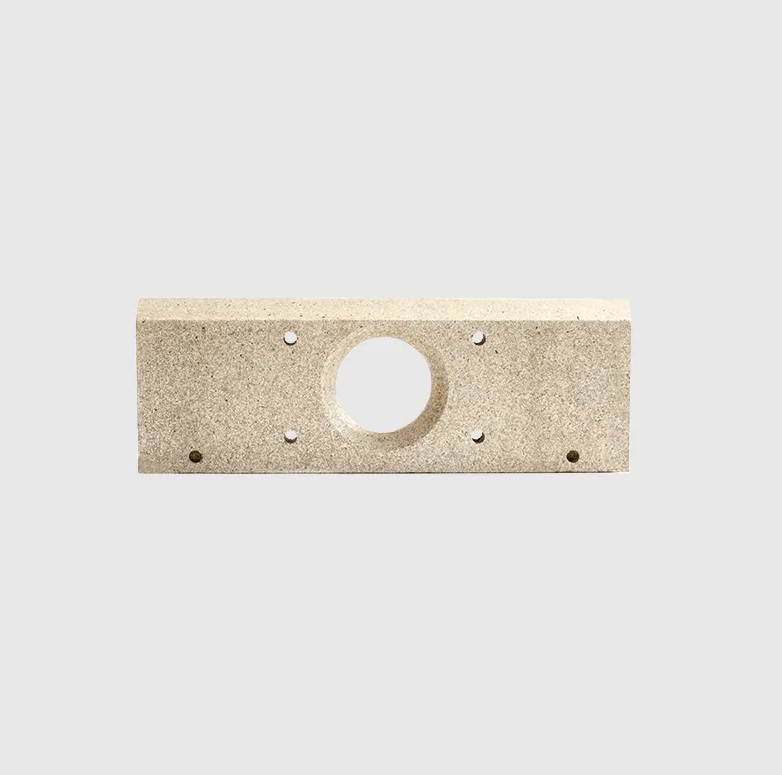
Vermiculite is not a synthetic material invented in a laboratory. It is a naturally occurring mineral that belongs to the phyllosilicate family, and its fire resistant properties are a direct result of its geological formation. Raw vermiculite ore contains water molecules chemically bound within its layered crystal structure. When the ore is heated rapidly in a process called exfoliation, that bound water flashes into steam, expanding the mineral into lightweight, accordion shaped granules that can be many times their original volume. These expanded granules are then pressed with binders into rigid boards. The resulting material contains countless microscopic air pockets trapped between the compressed mineral layers, and still air is one of the most effective thermal insulators available. When a vermiculite board is exposed to fire, it resists heat transfer through three mechanisms simultaneously. The trapped air spaces impede conductive heat flow. The mineral itself is chemically inert and does not contribute fuel to the fire. And under extreme heat, the chemically bound water that remains in the mineral structure is released as steam, absorbing a significant amount of thermal energy in the phase change from liquid to gas. This combination of physical and chemical fire resistance makes vermiculite boards uniquely suited to protecting structural steel.
Why Steel Loses Its Load Bearing Capacity and How Insulation Prevents It
Structural steel is non combustible, which sometimes creates a false sense of confidence about its fire performance. Steel does not burn, but it loses strength rapidly when heated. As the temperature of a steel member rises, its yield strength and modulus of elasticity begin to decline. At a critical temperature threshold that is well below the temperature of a typical building fire, unprotected steel can lose enough of its designed strength that it no longer safely supports its intended load. This is the engineering reality that building codes address through fire resistance rating requirements. A vermiculite board installed around a steel column or beam functions as a thermal barrier. It slows the rate at which heat from a fire reaches the steel surface, keeping the temperature of the structural element below its critical failure point for a specified period. That period, measured in minutes or hours, is what allows building occupants to evacuate, fire services to respond, and the building structure to remain standing long enough to prevent catastrophic collapse. The board does not make the steel fireproof. It buys time, and in structural fire engineering, time is the resource that matters most.
Meeting the Regulatory Standards That Govern Structural Fire Safety
Building codes in most developed markets mandate fire protection for structural steel elements in a wide range of building types. The specific requirements vary by jurisdiction, building height, occupancy classification, and the role of the steel member in the structural system, but the underlying principle is consistent. A steel column that supports multiple floors must maintain its load bearing capacity for a defined fire resistance period, typically expressed as a rating such as 60 minutes, 90 minutes, or 120 minutes. Vermiculite board systems are tested against standardized fire curves that simulate the temperature development of a real building fire. The testing measures the time it takes for the protected steel to reach its critical failure temperature, and the results are published as certified fire resistance ratings. Specifying a board system with a documented rating gives the design team, the building control authority, and the insurer verifiable evidence that the fire protection strategy meets the required standard. This certification chain is essential because fire protection is not a visible performance attribute. It only proves its value on the worst day of a building's life.
An Honest Assessment of Board Systems, Sprays, and Paints
The market offers several approaches to structural steel fire protection, and an honest comparison helps specifiers match the method to the project. Cementitious spray applied coatings can cover complex geometries economically but create significant overspray during application, require curing time, and produce a rough, dusty surface that is unsuitable for exposed architectural steel. Intumescent paint systems provide a thin, smooth finish that preserves the visual appearance of the steel, but they rely on chemical adhesion to the substrate and must be applied under strictly controlled environmental conditions to perform as rated. Vermiculite boards offer a different set of trade offs. They are mechanically fixed with screws and anchors, which means the fire protection does not depend on chemical bond integrity under high temperature exposure. The board thickness is manufactured to a consistent dimension, so the installed protection thickness is verifiable by simple visual inspection. The finished surface is clean, paint grade, and suitable for applications where the protected steel remains visible in occupied spaces. The boards also provide a degree of thermal and acoustic insulation beyond their fire protection function. The honest recommendation depends on whether the priority is lowest installed cost, architectural finish quality, or installation robustness in an active construction environment.
Specifying Fire Protection Boards from a Supplier with Manufacturing Control
The fire resistance rating stamped on a vermiculite board is only as reliable as the manufacturing process that produced it. A board that varies in density from batch to batch will not deliver consistent thermal performance. A board with inconsistent thickness will create gaps or thin spots in the installed protection envelope. A board manufactured from poorly exfoliated vermiculite or inferior binders may degrade prematurely in service even before a fire event occurs. These manufacturing variables are invisible at the point of specification, but they become immediately apparent if the fire protection system fails a building control inspection or, in the worst case, fails to perform during an actual fire. Millegap supplies vermiculite boards with the understanding that fire protection is a safety critical product category where manufacturing consistency is non negotiable. The controlled production process, from raw vermiculite sourcing to final board curing and dimensioning, ensures that every board shipped to a construction site or fabrication shop delivers the documented fire resistance performance that the specification requires. For the engineer specifying passive fire protection and the contractor installing it, that manufacturing discipline is what turns a material specification into a verifiable layer of structural safety.
Table of Contents
- When a Workshop Fire Starts Where No One Was Looking
- What Happens Inside a Vermiculite Board When Exposed to Extreme Heat
- Why Steel Loses Its Load Bearing Capacity and How Insulation Prevents It
- Meeting the Regulatory Standards That Govern Structural Fire Safety
- An Honest Assessment of Board Systems, Sprays, and Paints
- Specifying Fire Protection Boards from a Supplier with Manufacturing Control