 EN

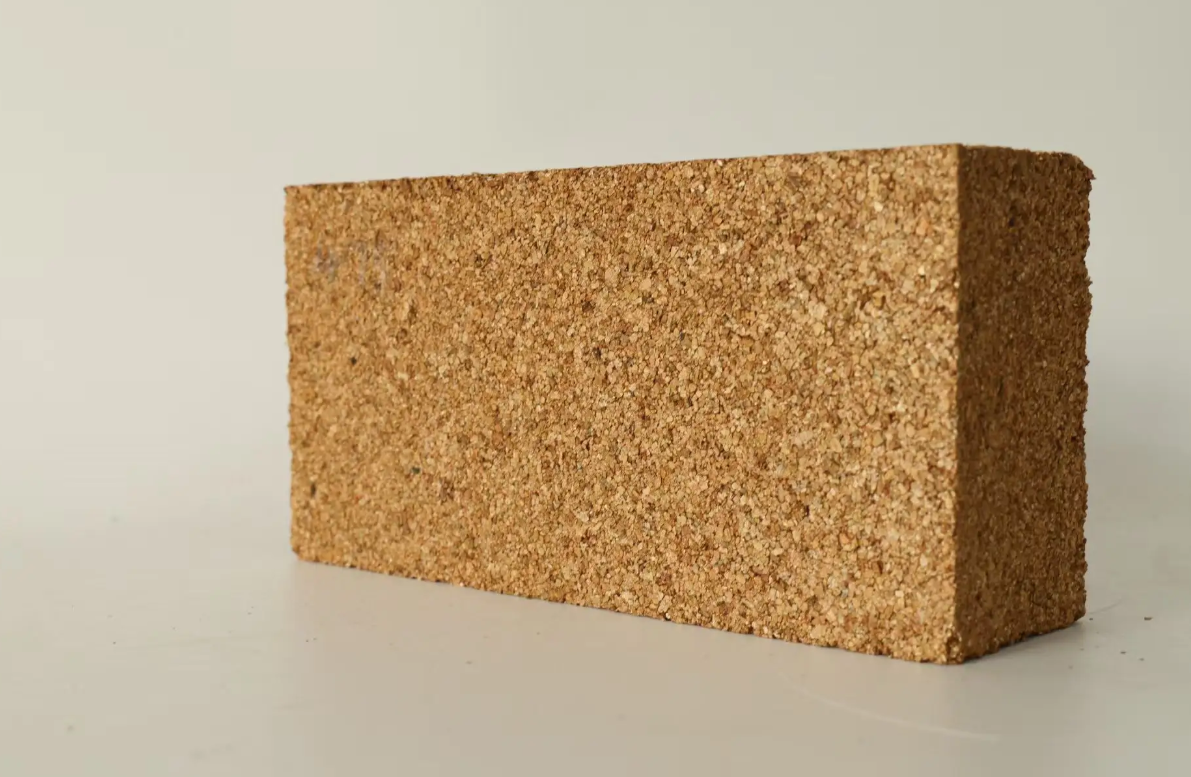
Safety Starts With the Whole Thermal System
A fireproof rating on a datasheet answers a narrow question: will the material resist ignition? Real safety performance is broader. Vermiculite fireproof boards earn attention in steel ladle lids, aluminum melting cell back-up linings, furnace doors, fireplace surrounds, and passive fire details because the material combines noncombustibility with thermal shock tolerance and low heat storage. The safety story is not one property. It is how the board behaves when a door slams shut at 800 C, when a lid cycles twice per shift, or when a crew cuts a panel on a wet scaffold. A board that passes a furnace test but cracks at an anchor point is not safer in service. The norm worth redefining is system-level safety: material, joint detail, drying schedule, and handling.
Thermal Shock and Crack Control
Exfoliated vermiculite is a hydrated phyllosilicate. After expansion, the mineral forms thin platelets, and an inorganic binder locks those platelets into a board. The matrix tolerates rapid temperature swings because it does not depend on a rigid, high-expansion skeleton. That is the mechanism behind good thermal shock resistance. The benefit has limits. Binder chemistry, maximum service temperature, and heat-up rate still set the ceiling. A board rated for 1,000 C in static service can still crack if a cold air damper hits the hot face. Test standards help separate data from marketing. Noncombustibility is commonly checked under ASTM E136 or ISO 1182. Reaction to fire classification may follow EN 13501-1. A datasheet that names the standard and the test temperature is more useful than a claim of "fireproof." For cyclic equipment, request thermal cycling data or field references on similar door and lid details.
Strength, Density, and Handling Tradeoffs
Crushing strength is a practical advantage. Vermiculite boards can be cut, drilled, and anchored with less edge crumbling than many low-density fiber boards. On a turnaround, fewer broken corners means faster installation and tighter joints. The trade-off is weight. A medium-density vermiculite panel is heavier than a ceramic fiber board, so anchor spacing and lifting plans need to match panel size. The table below gives indicative ranges. Values shift with binder, density, and test temperature. Supplier datasheets should decide final selection.
| Property | Vermiculite fireproof board | Calcium silicate board | Ceramic fiber board |
|---|---|---|---|
| Density, kg/m3 | 600 to 900 | 600 to 1,000 | 200 to 400 |
| Crushing strength, MPa | 5 to 12 | 8 to 15 | 0.2 to 0.8 |
| Thermal conductivity at 600 C, W/m K | 0.14 to 0.20 | 0.12 to 0.18 | 0.10 to 0.16 |
| Thermal shock resistance | Good | Moderate | Excellent |
| Cutting dust | Low to moderate | Moderate | High |
These ranges are not a ranking. Ceramic fiber can be right when low weight dominates. Calcium silicate can fit high-strength backup. Vermiculite boards sit in a middle zone where moderate strength, low heat storage, and thermal shock tolerance need to coexist.
Heat Storage and Conductivity Need the Same Baseline
Low thermal conductivity gets the headline, but heat storage often decides how a cyclic furnace feels. Heat storage depends on density and specific heat. A dense lining soaks up heat during warm-up and releases it during cool-down. A vermiculite board with controlled density can reduce that thermal flywheel effect. The comparison has a catch. Conductivity must be compared at the same mean temperature. A value at 200 C and a value at 600 C are different operating points, not competing claims. Thermal conductivity is often measured under ASTM C177 or ISO 8302. For a furnace door or ladle lid, hot-face temperature, anchor temperature, and shell limit should be checked against prior installations. Vermiculite boards are not a universal replacement for dense hot-face refractories. High abrasion or heavy slag contact may still need a hard face or sacrificial layer.
Moisture, Cutting, and Installation Discipline
Vermiculite boards can pick up moisture during storage and installation. A controlled dry-out schedule matters on thick sections and enclosed linings. Trapped moisture can cause steam spalling during the first heat-up. That failure is often blamed on the board, yet the real cause is the schedule. Custom-cut panels with accurate dimensions reduce gaps and make joint sealing more reliable. Tight tolerances do not replace expansion allowance. Butt joints packed too hard can buckle when the lining heats up. A 2023 retrofit at a copper smelter in southern China showed the pattern. Maintenance crews replaced cracked calcium silicate panels around furnace access doors, then watched new cracks open after rapid shutdowns. A thicker board did not solve the issue. The fix used a vermiculite board with lower heat storage and a revised door frame that allowed slight movement. Material and detail worked together.
Where Vermiculite Boards Fit and Where They Do Not
Vermiculite fireproof boards make sense in cyclic thermal equipment where moderate strength, low heat storage, and thermal shock resistance all matter. Steel ladle lids, aluminum melting cell back-up linings, fireplace surrounds, furnace doors, and passive fire details are typical fits. Limitations should be stated plainly. Service temperatures beyond the binder rating call for a different material. High abrasion or slag contact may require a hard facing. Very low weight targets may favor fiber boards. Bluewind supports custom dimensions, batch consistency, and supply planning for insulation and fire protection vermiculite products. That manufacturing and supply discipline matters when a project needs repeatable panels, not just a bench sample. The safety norm worth adopting is simple: judge the board by how it performs in the installed system, not by a single line on a certificate.