 EN
EN

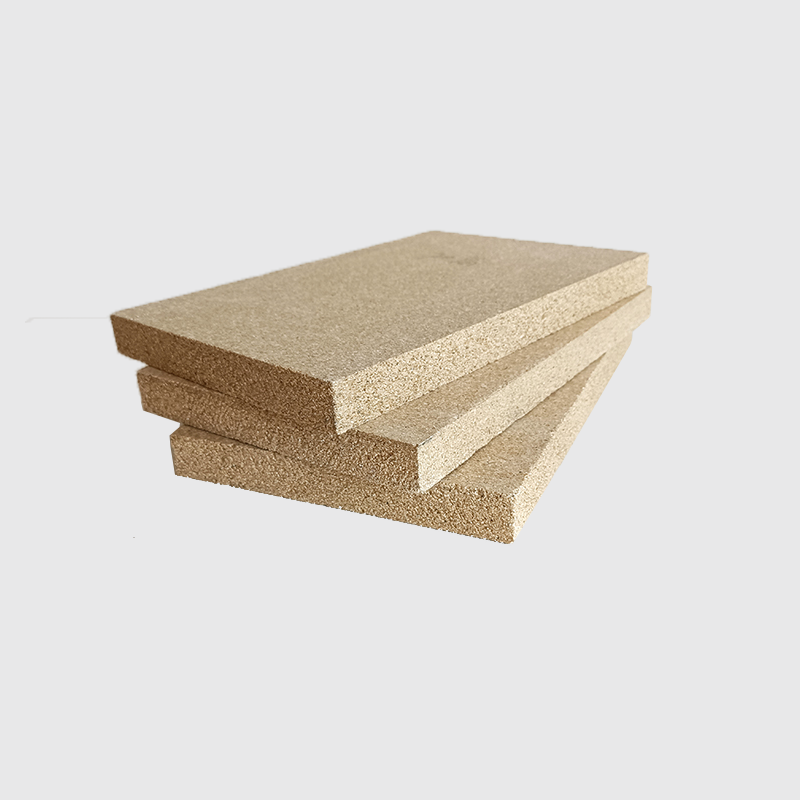
Why Vermiculite Board for Steel Offers Superior Fire Resistance
Endothermic Expansion and Insulating Char Formation Mechanism
The vermiculite board works its magic on steel using two main processes at once. When subjected to intense heat from a fire, this material can actually expand by around three times its original size. As it does so, it releases water that was chemically locked inside during manufacturing, which helps soak up the surrounding heat and lower temperatures nearby. At the same time, the surface transforms into a protective crust that doesn't conduct heat very well. Tests show this charred layer has thermal conductivity ratings down near 0.085 W/mK, making it quite good at stopping flames from reaching the steel underneath. This combination of expansion and insulation properties makes vermiculite boards particularly effective for fire protection applications.
How It Delays Critical Steel Temperature Rise (550°C Threshold)
When structural steel reaches about 550 degrees Celsius, it basically loses half what it can hold up - something engineers have known for ages as a critical failure point during fires. The vermiculite boards create this protective char layer that keeps the steel cool enough under those conditions for roughly an hour to two hours according to EN 1363-1 testing standards in furnaces. What makes these boards work so well is their poor ability to conduct heat. This creates a big difference in temperature across the material, which means heat moves much slower through them. As a result, structures stay intact longer before they start breaking down from the heat damage.
Designing Effective Steel Protection with Vermiculite Board
Compliance with Key Standards: EN 1363-1, ASTM E119, and BS 476-20
Vermiculite board for steel must meet internationally recognized fire resistance standards to ensure reliable performance:
- EN 1363-1, the European benchmark for fire resistance testing,
- ASTM E119, which evaluates structural integrity and insulation under fire exposure in the U.S., and
- BS 476-20, the UK standard for fire propagation and temperature rise assessment.
Independent third-party testing confirms compliance—including Class A/Class 0 surface spread of flame ratings and fire resistance durations exceeding 120 minutes (UL 2024). Crucially, compliant systems maintain back-surface temperatures below 300°C, ensuring steel remains well below the 550°C critical threshold during standardized fire exposure.
Encasement Best Practices: Thickness, Joint Sealing, and Load-Bearing Integration
Effective protection hinges on precise installation aligned with structural and thermal behavior:
| Factor | Technical Requirement | Performance Impact |
|---|---|---|
| Board Thickness | 25–50 mm (selected based on steel section size and required fire rating) | Directly determines fire-resistance duration |
| Joint Sealing | Fire-rated mastics or intumescent strips | Prevents convective and conductive heat bypass at seams |
| Load Integration | Mechanical fixings designed for thermal expansion compatibility | Ensures system stability without delamination or buckling under fire conditions |
Portland cement or potassium silicate binders enhance refractory performance, while integrated support systems preserve dimensional integrity. Properly sealed and fixed vermiculite encasements reduce heat transfer to steel by 85% compared to unsealed assemblies (Fire Safety Journal, 2023), substantially extending time-to-collapse.
Real-World Applications of Vermiculite Board for Steel in High-Heat Environments
Performance in Steel Plant Infrastructure: Furnaces, Kilns, and Exhaust Ducts (Up to 1400°C)
Vermiculite board excels in extreme industrial environments where conventional fireproofing fails. Its engineered mineral composition delivers proven performance across high-heat infrastructure:
- Furnaces & kilns: Sustains structural integrity at continuous temperatures above 1000°C, with peak tolerance up to 1400°C,
- Exhaust ducts: Mitigates heat transfer to supporting steel frameworks, preventing thermal deformation during operational surges, and
- Load-bearing columns and beams: Maintains strength and geometry under repeated thermal cycling—critical in facilities with frequent heating/cooling cycles.
The same endothermic expansion and char-forming mechanism that delays steel’s approach to 550°C also ensures long-term dimensional stability, eliminating warping or spalling even after prolonged exposure.
Vermiculite Board vs. Alternatives: Advantages for Structural Steel Fireproofing
When looking at options for protecting structural steel from fire damage, vermiculite board stands out compared to materials like mineral wool and gypsum board. Thermal conductivity measurements tell the story pretty clearly. Vermiculite has around 0.065 W/mK, which means it absorbs heat better than mineral wool that ranges between 0.035 to 0.04 W/mK. Gypsum boards are even worse performers with values above 0.16 W/mK. What this really means is that steel structures protected with vermiculite take much longer to reach critical temperatures like 550 degrees Celsius during a fire event. Another big plus is how vermiculite works differently from standard insulation materials. Instead of just sitting there passively, it actually reacts to heat by cooling down while creating a tough protective layer over time something traditional insulation simply cannot do.
Weighing in at around 70 percent less than similar mineral based systems, vermiculite makes things much easier when it comes to handling and installing, which can slash labor costs by roughly 30%. This really matters for jobs like seismic retrofits where access is limited or restricted spaces. What's great about vermiculite is that it doesn't burn at all and won't release any harmful stuff during fires. Plus it stands up well against mold growth, dampness, and rust problems that plague many synthetic materials. Independent studies looking at its entire life cycle have shown it fits nicely within LEED sustainability standards because it can be recycled and requires relatively little energy to produce from start to finish.
Comparative Fireproofing Material Attributes
| Property | Vermiculite Board | Mineral Wool | Gypsum Board |
|---|---|---|---|
| Weight | Ultra-light | Heavy | Moderate |
| Thermal Conductivity | Low (≤0.065 W/mK) | Moderate (0.035–0.04) | High (>0.16) |
| Fire Resistance | Up to 1400°C | Up to 1000°C | Up to 600°C |
| Sustainability | Non-toxic, recyclable | Limited recyclability | High embodied carbon |
These attributes make vermiculite board for steel the preferred solution where uncompromised fire safety, long-term durability, lifecycle cost efficiency, and environmental responsibility converge—particularly in demanding applications such as furnace enclosures, high-rise structural cores, and industrial process infrastructure.
FAQs
What is the main advantage of using vermiculite boards for steel fireproofing?
The main advantage is their superior fire resistance, which results from their ability to expand and create an insulating char layer during fire events, significantly delaying the rise of temperature in steel.
How does vermiculite board compare to mineral wool and gypsum board?
Vermiculite board has lower thermal conductivity than mineral wool and gypsum board, making it more effective in slowing down heat transfer. It is also lighter and non-toxic.
Does vermiculite board comply with fire resistance standards?
Yes, vermiculite boards comply with key fire resistance standards such as EN 1363-1, ASTM E119, and BS 476-20.