 EN
EN

What Refractory Grade Actually Means Here
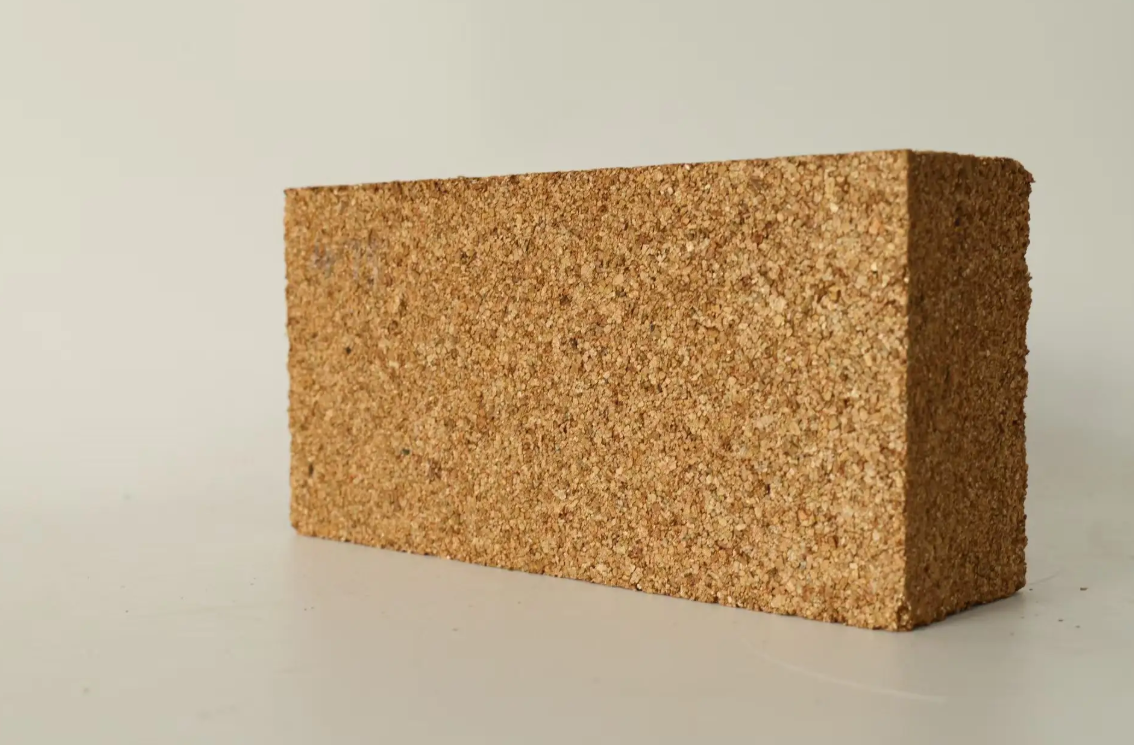
A refractory vermiculite board is not just a standard insulation panel with a higher temperature rating. The term refractory signals that the board is engineered to survive direct exposure to high heat, repeated thermal cycling, and mechanical stress without losing its shape or insulating value. That's a different challenge from simply filling a wall cavity.
The base mineral starts as a layered silicate. After controlled expansion, it forms lightweight particles with trapped air pockets. Those pockets slow heat transfer. When those particles are compressed into board form, the result is a rigid panel that can be cut, routed, and installed in demanding positions.
The refractory version typically uses higher density and tighter dimensional control than general-purpose vermiculite board. That's what allows it to sit close to flames, molten metal splash zones, or furnace linings without degrading in weeks.
Thermal Shock Is the Test Most Products Fail
Heat alone rarely destroys a properly selected insulation material. What breaks things is the cycle. Heating up, cooling down, and heating again creates expansion and contraction. If the material can't absorb that movement, cracks form, and those cracks become heat leaks.
Refractory vermiculite board handles this cycling better than many alternatives. The expanded particle structure gives the board a degree of internal flexibility. Micro-movements don't immediately translate into fractures. In steel ladles, aluminum melting cells, and industrial furnaces, that resistance to thermal shock often determines whether a lining lasts months or years.
The table below compares refractory vermiculite board with other common high temperature panel materials.
| Material | Thermal Shock Resistance | Max Service Temperature | Crushing Strength | Machinability |
|---|---|---|---|---|
| Refractory vermiculite board | Excellent | Up to 1100 C range | High | Excellent |
| Ceramic fiber board | Good | Higher range possible | Low to moderate | Limited |
| Calcium silicate board | Moderate | Up to 1000 C range | Moderate | Good |
| Mineral wool board | Fair | Lower range | Low | Limited |
Low Heat Storage Changes Equipment Behavior
One property that gets less attention than it should is heat storage. A material with high heat storage absorbs a lot of energy before it starts transferring heat to the surrounding structure. In a furnace or fireplace, that means longer warm-up times and more fuel consumed before useful heat reaches the target.
Refractory vermiculite board has low heat storage. It heats up quickly and begins contributing to the thermal barrier early in the cycle. For industrial equipment, that translates into faster startup and more stable operating conditions. For fireplaces and stoves, it means the room gets warm sooner.
That characteristic also helps with temperature control. When equipment cycles on and off, a lining with low heat storage responds faster to changes. The system doesn't fight against a large thermal mass that keeps radiating heat after the burner shuts down.
Custom Dimensions Reduce Installation Problems
Field-cut insulation often looks fine during installation and then shows its weaknesses after thermal cycling starts. Gaps open at joints, panels shift, and heat finds a way through. The problem isn't always the material. It's the fit.
Factory-machined refractory vermiculite board solves much of that. Components arrive cut to the actual geometry of the furnace, ladle, or heating appliance. Joints close tightly, and the lining behaves as a continuous thermal barrier rather than a collection of loose pieces.
For equipment builders, that also means less time spent trimming panels on site. The boards drop into place, and the installation crew can move on to the next task. Custom sizing is not an expensive extra in these applications. It's often the difference between a lining that works and one that needs constant patching.
A Retrofit Job Showed the Value of Precision Fit
A furnace retrofit team in a metal processing plant was replacing an old lining that had developed persistent hot spots. The previous panels had been cut on site, and the joints didn't match the furnace curvature well. After several months of operation, the gaps had widened enough to raise the outer shell temperature.
The replacement lining used refractory vermiculite boards machined to the exact dimensions of each section. The joints fit tightly, and the hot spots disappeared after the furnace returned to service. The material wasn't radically different in composition from what the team had used before. The improvement came from fit, dimensional accuracy, and the board's ability to hold its shape through repeated cycles.
That's a common outcome in high temperature equipment. The product matters, but the engineering around it often decides whether the installation performs as expected.
Honest Limits Keep Applications Realistic
Refractory vermiculite board has real limits, and responsible buyers should know them. The maximum service temperature is not unlimited. Above its rated range, the board structure begins to degrade. In those cases, ceramic fiber or other refractory materials may be the better option.
Moisture is another factor. The board should be stored dry and kept dry during installation. Trapped moisture can convert to steam when the equipment heats up, and that rapid expansion can crack the panel from inside.
Mechanical abuse is also worth noting. While the board has high crushing strength for an insulation material, it is not structural steel. It cannot carry heavy mechanical loads. In applications where the lining must support weight or resist severe impact, additional engineering support is required.
Manufacturing Consistency Decides the Final Result
A refractory vermiculite board only works as well as its manufacturing process allows. Density needs to be uniform across the panel. Dimensions need to match the drawing. The surface has to be clean enough for tight joints. When those details slip, thermal performance slips with them.
That's where an experienced supplier becomes valuable. Millegap specializes in insulation materials and fire protection vermiculite products, with a focus on user-specific system solutions. Accurate and customized dimensions, high crushing strength, and low thermal conductivity are the traits that matter in steel ladles, aluminum cells, furnaces, and fireplaces. A board that's engineered with those priorities in mind is not just a panel. It's a component in a thermal system that has to perform for years.
Table of Contents
- What Refractory Grade Actually Means Here
- Thermal Shock Is the Test Most Products Fail
- Low Heat Storage Changes Equipment Behavior
- Custom Dimensions Reduce Installation Problems
- A Retrofit Job Showed the Value of Precision Fit
- Honest Limits Keep Applications Realistic
- Manufacturing Consistency Decides the Final Result