 EN

Why Fire Safety in Industrial Spaces Is a Materials Problem
Industrial fire safety often gets reduced to alarms, sprinklers, and training. Those matter. But the barrier that keeps a hot process from becoming a building fire is usually a material decision. A vermiculite fire board is one of the few rigid insulation products that combines noncombustible behavior, thermal shock tolerance, and enough strength to hold shape around doors, dampers, and penetrations.
Plants with furnaces, ovens, ladles, and melting cells do not face a single fire scenario. They face continuous heat, cyclic expansion, vibration, and occasional splash. A board that sags or crumbles after a few thermal cycles opens gaps. Gaps let heat and embers reach structural steel, cables, or stored material. Fire protection in industrial spaces is less about a label and more about how a panel behaves after a hundred heat cycles.
What Makes Vermiculite Fire Board Different
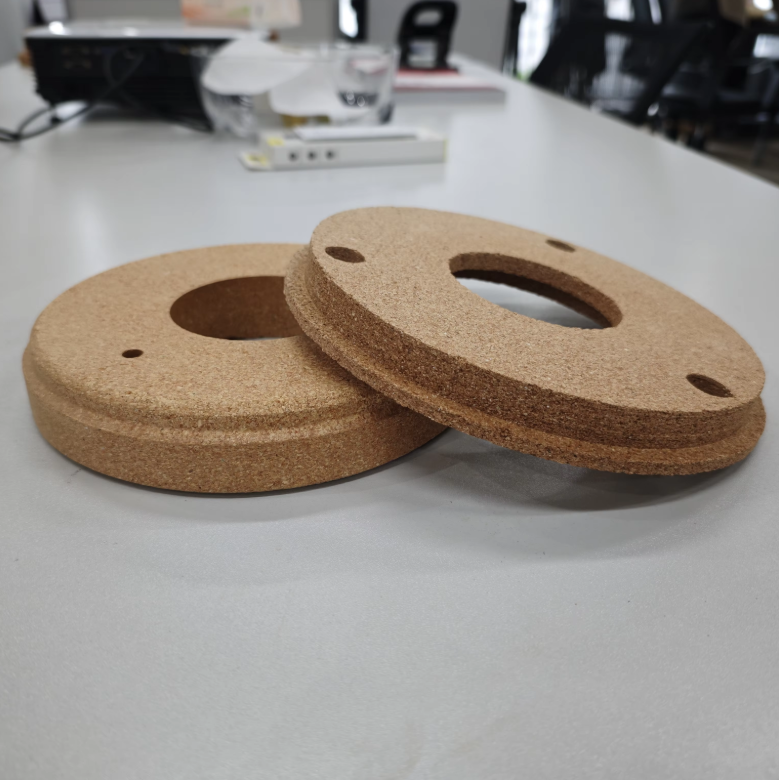
Expanded vermiculite is a layered mineral. When heated during processing, it exfoliates into lightweight flakes. Pressed with a binder, those flakes form a dense but machinable panel. The result is not a fiber blanket and not a heavy fire brick. It sits in a useful middle ground.
Key behavior comes from the mineral structure. Vermiculite does not melt or burn at common industrial temperatures. The binder can be selected for high-temperature service, moisture resistance, or mechanical strength. A vermiculite fire board can be cut with standard woodworking tools, drilled, and fitted with tight tolerances. That matters because fire performance depends on joints as much as on the panel core.
Compared with ceramic fiber, vermiculite board is heavier and has higher thermal conductivity. Compared with calcium silicate, it often handles thermal shock better. Compared with mineral wool, it resists compression and erosion far better. Compared with gypsum, it works at temperatures that would destroy gypsum core. No single property wins everywhere. The combination earns a place in industrial fire protection.
Performance Data That Matters During Specification
Specifiers should ask for test data, not just marketing language. Noncombustibility is commonly verified under ASTM E136 or ISO 1182. Surface burning characteristics may be reported under ASTM E84. European projects often look for EN 13501-1 classification. For furnace and oven safety, NFPA 86 is a common design reference. They do not replace a site-specific risk assessment, but they give a baseline for comparison.
| Property | Vermiculite fire board | Calcium silicate | Ceramic fiber board | Mineral wool board | Gypsum board |
|---|---|---|---|---|---|
| Noncombustible | Yes, ASTM E136 | Yes, varies | Yes, ISO 1182 | Yes, varies | Paper facing limits |
| Max continuous use, C | 900 to 1100 | 650 to 1000 | 1100 to 1400 | 650 to 750 | 100 to 150 |
| Thermal shock resistance | High | Medium | Medium to high | Low to medium | Low |
| Compressive strength | High | Medium to high | Low | Low | Medium |
| Dimensional stability | High | Medium | Medium | Low | Low at heat |
| Smoke contribution | Very low | Low | Low | Low | Variable |
A lower conductivity number is not the only goal. In a fire barrier, the ability to stay in place and keep joints closed can matter more than a small difference in thermal conductivity.
Installation Details That Decide Real Fire Performance
A panel rated in a lab can fail in a plant because of installation. Common problems include gaps at edges, crushed insulation at anchor points, missing expansion allowance, and unprotected fasteners. A rigid vermiculite fire board reduces some of those risks, but it does not remove them.
Good practice starts with dry-fitting. Panels should be cut to fit around door frames, burner openings, and observation ports. Stepped or shiplap joints reduce straight-through gaps. High-temperature sealant or gasketing should match the expected temperature and atmosphere. Fasteners need washers or clips that spread load without creating thermal bridges. Expansion gaps should be sized for the hottest expected condition, not room temperature.
During a retrofit at a metal processing plant in the Midwest, a furnace access door had mineral wool board behind a steel skin. The door cycled several times per shift. After about a year, the wool had compressed, the skin had warped, and hot spots appeared near the hinge. The maintenance team replaced it with medium-density vermiculite fire board, CNC-cut to match the door ribs. Stepped joints and a small expansion gap were used at the frame. After two years of similar cycling, panel thickness was stable and hot spots had disappeared. The latch edge still wore from mechanical contact, so a stainless strip was added later. That detail mattered as much as the board.
Limits, Failure Modes, and Honest Trade-Offs
Vermiculite fire board is not a universal answer. It is heavier than ceramic fiber, so weight-sensitive structures may need a different design. It is not immune to chemical attack. Strong alkalis, certain fluxes, and molten reactive metals can degrade the binder or the mineral. High-moisture environments may require sealing because some grades absorb water and lose strength. If the hot face exceeds the rated limit, the binder can break down even when the vermiculite remains stable.
Mechanical abuse is another limit. Repeated impact from tools, slag, or moving parts can chip edges. Those chips create paths for heat and should be repaired or replaced. In high-vibration equipment, anchors and support framing deserve extra attention. A fire board performs as part of a system that includes substrate, fasteners, sealant, and surrounding steel.
Matching the Board to the Hazard, Not the Catalog
A practical selection process starts with the hazard, not the product name. The following questions help narrow the field:
-
What is the normal hot-face temperature and the short-term peak?
-
How many heat cycles occur per day or per campaign?
-
Is there abrasion, gas velocity, or molten splash?
-
What atmosphere or chemical contact is expected?
-
How will panels be cut, anchored, and sealed at joints?
-
What inspection and repair access is needed after installation?
Request batch-specific data for density, compressive strength, thermal conductivity, and noncombustibility. Test cut quality and edge strength on a sample. A board that machines cleanly and holds a screw saves labor and reduces gaps on site.
For industrial fire protection projects that need dependable vermiculite-based components, Millegap supports manufacturing, distribution, and user-specific system solutions across steel ladle, aluminum melting, heating equipment, fireplace, furnace, and construction applications. In-house machining, batch traceability, and supply chain coordination help keep specifications consistent from first article to repeat order. The right fire board is not the cheapest or thickest. It matches the hazard, installs cleanly, and holds shape after the heat cycles that matter.
Table of Contents
- Why Fire Safety in Industrial Spaces Is a Materials Problem
- What Makes Vermiculite Fire Board Different
- Performance Data That Matters During Specification
- Installation Details That Decide Real Fire Performance
- Limits, Failure Modes, and Honest Trade-Offs
- Matching the Board to the Hazard, Not the Catalog